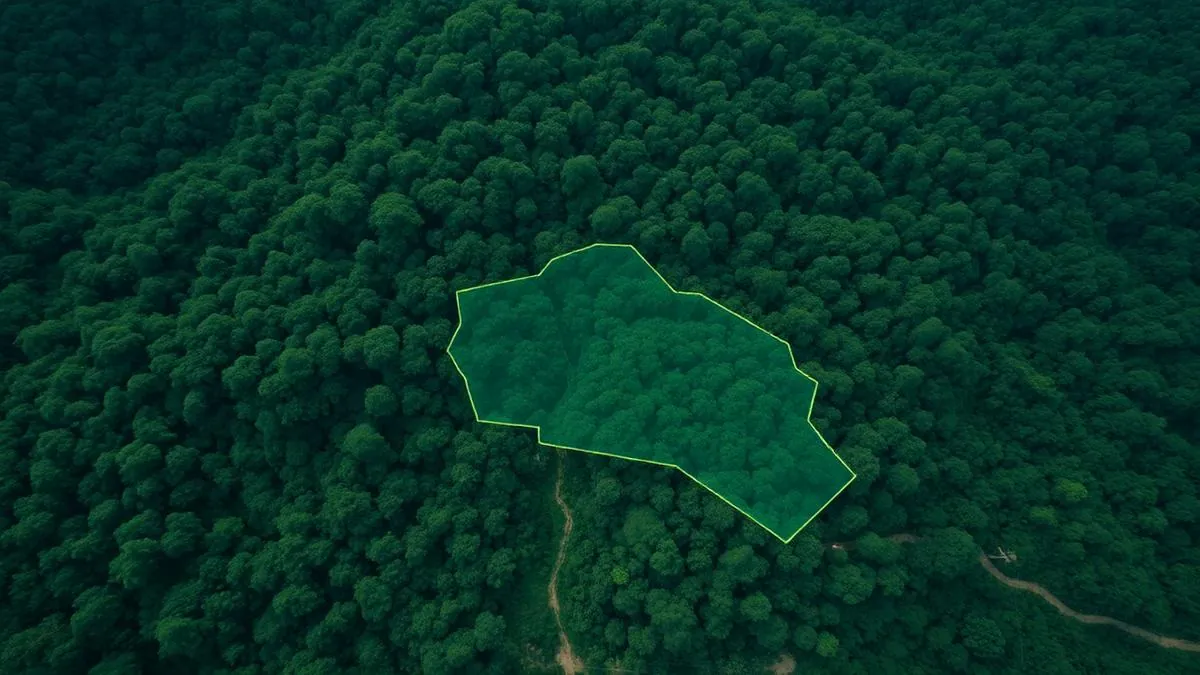
REDD+: how carbon offsetting works in the Amazon
Keeping forest standing generates carbon credits. How REDD+ works, who certifies it, what it costs, and why it is the most used credit type in Brazil, without falling into greenwashing.
What REDD+ means
REDD+ stands for *Reducing Emissions from Deforestation and forest Degradation*. The "+" covers conservation, sustainable management and enhancement of forest carbon stocks. It is a mechanism established under the UNFCCC in 2010 (Decision 1/CP.16, Cancún) and formally referenced in the Paris Agreement (Article 5).
The core idea is simple: standing forest delivers a concrete environmental service, which is keeping carbon out of the atmosphere. Whoever funds that service (a company, a government, a fund) receives a credit equal to the tonne of CO₂ that was not emitted. The credit has a unique ID, is publicly registered and can be used to offset emissions, once.
Why standing forest is worth a credit
Each hectare of Amazon forest stores between 100 and 200 tonnes of carbon in above- and below-ground biomass, according to IPCC AR6 (2022). When that forest is cleared, the carbon becomes atmospheric CO₂ over a period of one to five years (immediate burning plus slow decomposition).
A REDD+ project demonstrates that, without the intervention (continuous funding, satellite monitoring, a fire brigade, alternative income for communities), that forest would have been cleared, and the carbon avoided becomes a tradable credit. The demonstration is the hard part.
How a credit is generated, step by step
- Baseline. The developer calculates historical deforestation (usually 10 years) and projects a without-project scenario using approved methodologies: VM0007 (legacy), VM0048 (current, more conservative) and VMD0055 (jurisdictional). The baseline defines how many hectares would be lost in the control scenario.
- Continuous monitoring. Satellite imagery (PRODES/INPE, MapBiomas, Planet and Sentinel sensors) verifies actual forest cover. Deep learning algorithms detect degradation the human eye misses.
- Independent verification. A third-party auditor accredited by Verra (DNV, Bureau Veritas, AENOR, RINA) compares baseline against reality. The difference in CO₂ becomes the credit to be issued.
- Issuance and retirement. Credits enter a public registry with a unique ID. When a company buys one to offset, the credit is retired, permanently removed from circulation, and the transaction stays visible in a public database.
Who certifies
In Brazil the dominant standard is Verra (VCS). For projects with social and biodiversity co-benefits, the CCB (Climate, Community & Biodiversity Standards) certification is added. Both require independent audit, continuous monitoring and full transparency.
Other relevant standards:
- ART/TREES: a jurisdictional standard (a whole state). Acre and Mato Grosso run active programmes.
- Gold Standard: focused on social co-benefits; less common in Amazon REDD+, dominant in cookstoves.
- Plan Vivo: small scale, community-based. Used in smaller projects.
Credit types by level of integrity
| Type | Permanence | Additionality | Reputational risk | Price range (USD/tCO₂e) |
|---|---|---|---|---|
| REDD+ Verra+CCB | Medium-high | High where forest was genuinely at risk | Low with a rating of A or better | 8-18 |
| ARR (reforestation) | High | High | Low | 25-45 |
| Jurisdictional REDD+ ART/TREES | High | High | Low | 12-22 |
| Cookstoves | Variable | Variable | Medium | 3-8 |
| DAC (direct air capture) | Very high | High | Low, but expensive | 400-600 |
| Biochar | High | High | Low | 100-180 |
| Legacy CDM | N/A | Low today | High, discontinued | 1-3 |
An honest critique: what can go wrong
REDD+ has a history of real controversy. The joint Guardian / Die Zeit / SourceMaterial investigation (January 2023) analysed 29 Verra projects and concluded that more than 90% of the credits issued by projects based on the VM0007 methodology did not represent real reductions. That caused a temporary price collapse and forced Verra to publish VM0048 and review legacy projects.
The typical weak points:
- An inflated baseline. The project assumes a future deforestation rate higher than what would actually happen, generating phantom credits.
- Leakage. Deforestation simply migrates to the neighbouring area with no project.
- Non-permanence. Fire or future clearing releases the carbon that had been saved.
- No FPIC. Indigenous and traditional communities not consulted, a high legal and reputational risk in Brazil.
- Double counting. The same credit claimed by the host country (in its NDC) and by the buying company.
How to mitigate those risks before buying
Our operational recommendation, drawn from hundreds of audits we have followed:
- Buy only with a rating of A or better from at least one of the three houses (Sylvera, BeZero, Calyx Global).
- Require a buffer pool of at least 20%, credits held back by Verra as insurance against reversal.
- Check for independent PRODES + MapBiomas monitoring published annually.
- Ask for the revised Project Description Document dated after 2024.
- Verify complete land tenure due diligence: an active rural environmental registry, no overlapping title, no Indigenous land inside the polygon.
- Document the chain of custody through to retirement, with IDs in a public registry.
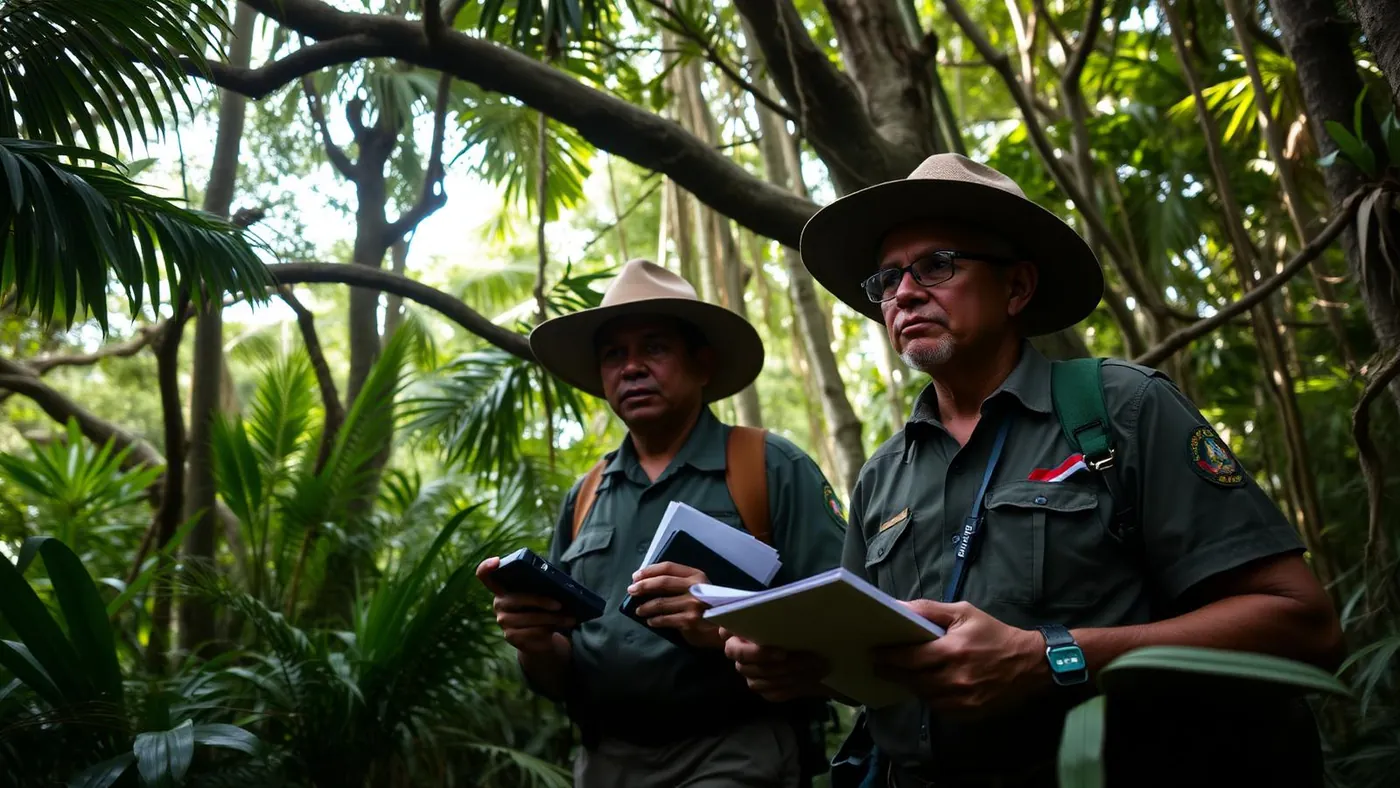
Mangue's choice
We work with Carbonext, our strategic investor and the largest REDD+ developer in the Brazilian Amazon (more than 1.2 million hectares under active conservation). The projects follow the Verra + CCB standard, with continuous monitoring via Planet and MapBiomas, audit by DNV and Bureau Veritas, a public policy of not operating on Indigenous land, and a documented FPIC process in every buffer community.
For clients who need to combine avoidance (REDD+) with removal (Brazilian ARR, biochar), we assemble a portfolio to order, already taking account of the SBTi V2 and ISO 14068-1 criteria.
- Do not buy a REDD+ credit that is not in a public registry (Verra, ART/TREES, Gold Standard) with a traceable retirement ID.
- Require an independent third-party rating (Sylvera, BeZero, Calyx); a fair price today for a quality project sits between USD 8 and USD 18/tCO₂e.
- Check that the baseline was revised in the last 24 months; VM0007 and VM0048 are acceptable methodologies, old VM0015 on its own is not.
- Combine REDD+ with removals (ARR, biochar) for a portfolio that stands up to SBTi V2 and the European Green Claims Directive.
- Document social safeguards (FPIC) and the absence of overlap with Indigenous land: that is the point that generates the most reputational litigation.
Perguntas frequentes
Is a REDD+ credit still worth anything after the 2023 controversies?+
Yes, but only the high-integrity ones. After the Guardian / Die Zeit / SourceMaterial report on baseline overstatement, the ICVCM published the Core Carbon Principles and Verra revised its methodologies (VM0048 replaces part of VM0007). Projects certified under the new rules carry much lower risk of retroactive invalidation.
What is the difference between jurisdictional REDD+ and project REDD+?+
Project REDD+ works in a defined area (a farm, a set of parcels). Jurisdictional REDD+ works at the scale of a whole state or country, with aggregated baseline and monitoring; ART/TREES is the main jurisdictional standard. Acre, Mato Grosso and Tocantins run active jurisdictional programmes.
Can I use REDD+ credits to claim net zero under SBTi?+
Not for the net-zero residual. SBTi V2 (2024) requires the residual (around 10% of emissions) to be neutralised only with removal credits (ARR, biochar, DAC), not with avoidance credits such as REDD+. But REDD+ remains valid for Beyond Value Chain Mitigation and for carbon neutrality claims under ISO 14068-1.
What does a Brazilian REDD+ credit cost today?+
For projects with Verra + CCB and a Sylvera rating of A or better: between USD 8 and USD 18 per tCO₂e (April 2026). Old cookstoves and retired CDM credits sit below USD 3 but are not recommended. Removal (Brazilian ARR) costs USD 25-45/tCO₂e; DAC, USD 400-600.
Does a REDD+ credit count towards Brazil's NDC?+
It depends on the mechanism. The voluntary market outside Article 6 does not automatically count towards the NDC. Credits transacted under Article 6.2 (ITMOs) require a corresponding adjustment: Brazil removes them from its own inventory before transferring. That is the critical point for avoiding double counting.
- REDD+
- Reducing Emissions from Deforestation and forest Degradation. The UNFCCC mechanism (Decision 1/CP.16, Cancún 2010) that pays for emission reductions from avoided deforestation. The '+' covers conservation, sustainable management and enhancement of forest stocks.
- Verra (VCS)
- The Verified Carbon Standard, run by the NGO Verra. The largest private carbon credit standard in the world, dominant in Brazilian REDD+.
- CCB
- Climate, Community & Biodiversity Standards. An additional certification attesting social and biodiversity co-benefits, frequently combined with VCS.
- ART/TREES
- Architecture for REDD+ Transactions / The REDD+ Environmental Excellence Standard. A jurisdictional standard used by states (Acre, Mato Grosso) and by whole countries.
- ICVCM
- Integrity Council for the Voluntary Carbon Market. The independent council that published the Core Carbon Principles in 2023, defining what separates a serious credit from a doubtful one.
- FPIC
- Free, Prior and Informed Consent, the consultation owed to local and Indigenous communities affected by a project.
- Baseline
- The hypothetical scenario of what would happen without the project. The difference between baseline and monitored reality becomes the credit. If the baseline is inflated, the credit is a phantom.
- Retirement
- The act of retiring a credit in the public registry for use as an offset. A retired credit cannot be resold or reused.
- Verified Carbon Standard · Verra
- Core Carbon Principles · ICVCM
Frameworks mencionados neste artigo
IFRS S1 & S2 Roadmap
The 12 decisions your CFO has to make before 2027. Free.