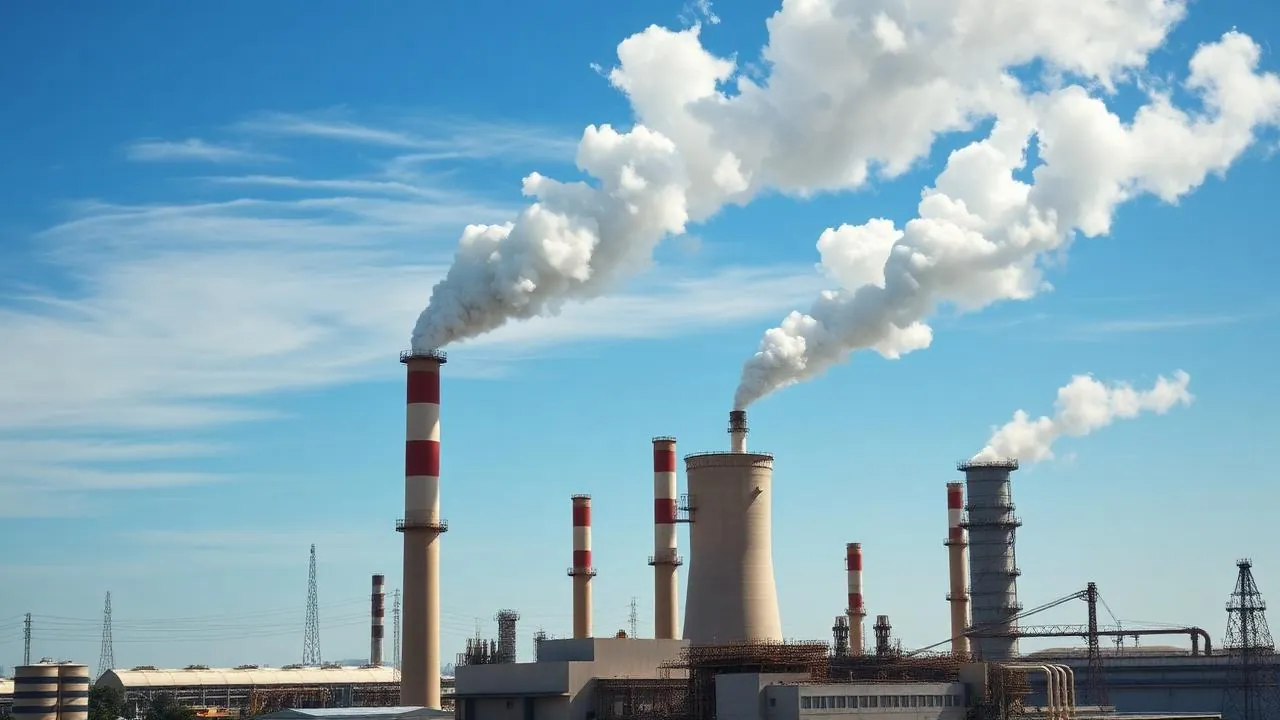

SBCE: Brazil's regulated carbon market
Law 15.042 created the Brazilian Emissions Trading System. Companies emitting more than 10,000 tCO₂e/year will be required to take part. The regulation is due by December 2026, with operation expected for 2028-2030.
Companies that trust Mangue Tech








Consulting + Platform
Operational data becomes auditable ESG indicators.
Specialist consulting that understands SBCE. A platform that automates the calculation, versions the data and exports it in the format the regulator requires.
Consultoria
ESG data and compliance management, with a specialist who knows your sector.
Plataforma
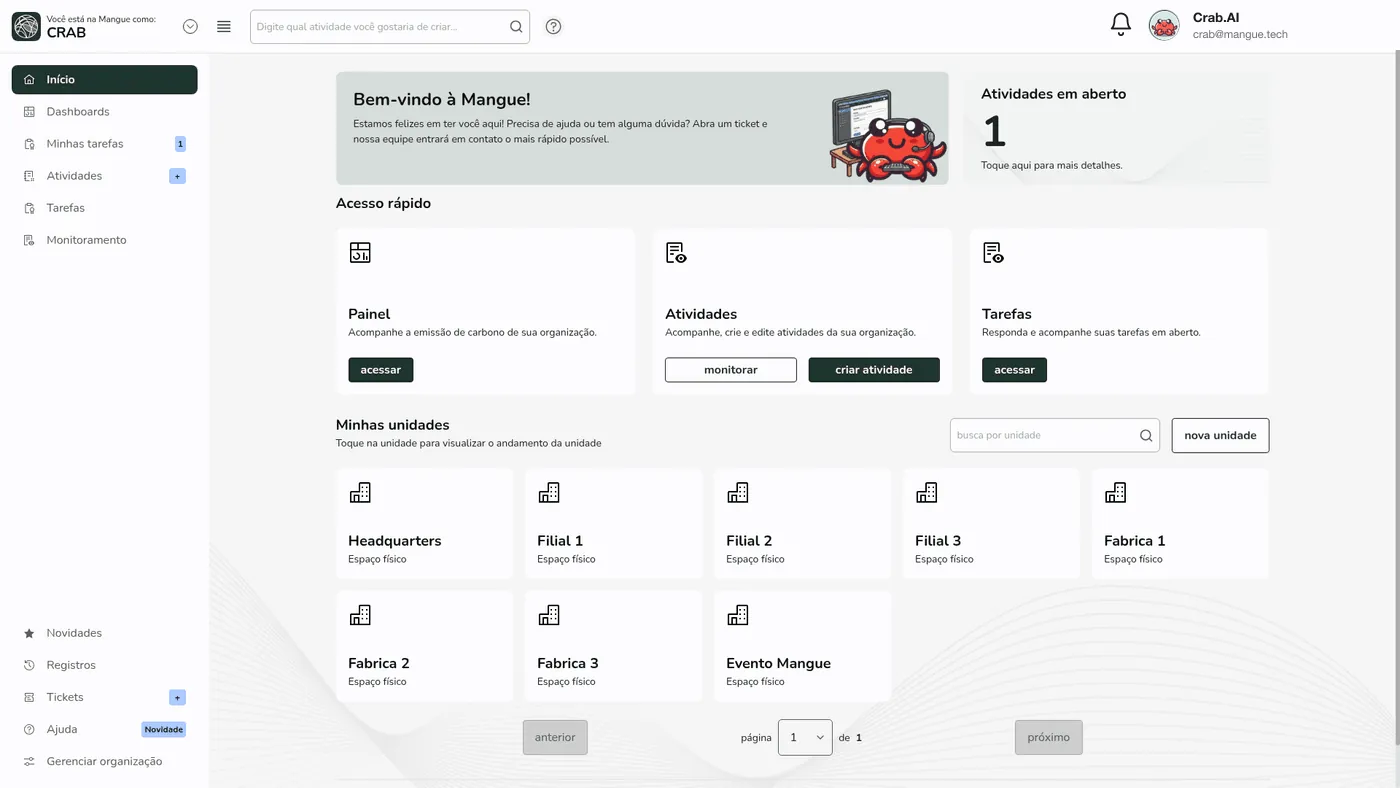
Our own software, automating calculations, indicators and exports.
Auditable reports
GHG inventory, decarbonization plan and reports ready for the auditor.
Less time
Automated collection vs. manual spreadsheet.
Global frameworks
IFRS, CSRD, CBAM, GRI, SASB, GHG, CDP…
Emission factors
IPCC, DEFRA, MCTI, EPA, Ecoinvent.
How Mangue works
4 steps. From diagnosis to an auditable report.
Diagnosis
Find out which ESG risks affect your business and what the regulator will require.
Estrutura
Organized data, defined processes and everything ready for any verification.
Operation
Emission calculations, decarbonization targets and continuous monitoring.
Auditable reports
Active compliance with IFRS, CSRD, CBAM, GRI, SASB and GHG Protocol.
Mangue deliverables for SBCE
Every delivery is a complete package: consultant + platform + auditable report. Click to see how we apply it.
Frameworks we apply
The framework
What it is, and why it matters.
The SBCE is Brazil's regulated carbon market, created by Law 15.042/2024. The model is cap-and-trade: the government sets an emissions cap and distributes (or auctions) allowances. Companies that emit above their cap have to buy allowances from those that emitted less.
Regulation will sit with ANAQ (the National Environmental Quality Authority), which will define the emission factors, the MRV rules (monitoring, reporting and verification) and the allowance allocation schedule. Full regulation is expected by December 2026.
The SBCE will have two obligation tiers: companies at 10,000-25,000 tCO₂e/year will have a reporting obligation (auditable inventory). Companies above 25,000 tCO₂e/year will have an offsetting obligation (buying allowances or credits). Full operation is expected for 2028-2030.
At scale
When the standard updates, the calculation engine is already up to date.
supported frameworks
GHG Protocol, CSRD, IFRS S2, CDP, GRI, SASB, CBAM, SBCE. One single database.
emission factors
IPCC, DEFRA, MCTI, EPA, Ecoinvent. All versioned, with source, year and gas.
scopes covered
Scopes 1, 2, 3 and biogenic. Operational and financial. Everything goes in.
Aplicabilidade
Who it applies to.
- Companies with emissions above 10,000 tCO₂e/year (reporting obligation to the SBCE).
- Companies with emissions above 25,000 tCO₂e/year (offsetting obligation and allowance purchase).
- Carbon-intensive industries: steel, cement, petrochemicals, mining, thermal power generation, pulp and paper.
- Companies that want to get ahead of the regulation to cut future compliance cost.
How we deliver
From source to auditor.
We deliver the full GHG Protocol inventory with an audit trail, the base that will be required for mandatory reporting to the SBCE.
The Mangue platform keeps an auditable year-by-year emissions history, which simplifies the baseline and the verification the regulator requires.
We track the regulatory changes and adjust the methodology as ANAQ publishes its rules, so the client is ready when the market starts operating.



The IFRS S1 & S2 Roadmap: the 12 decisions your CFO must make before 2027
A practical guide for CFOs, IR Directors, Controllers and Accounting. ~15 min read, straight to your inbox.