SBCE: everything about Brazil's regulated carbon market
A complete guide to the Brazilian Emissions Trading System created by Law 15,042: timeline, participation thresholds, cap-and-trade vs offsetting, and how to prepare.

What the SBCE is, and Law 15,042
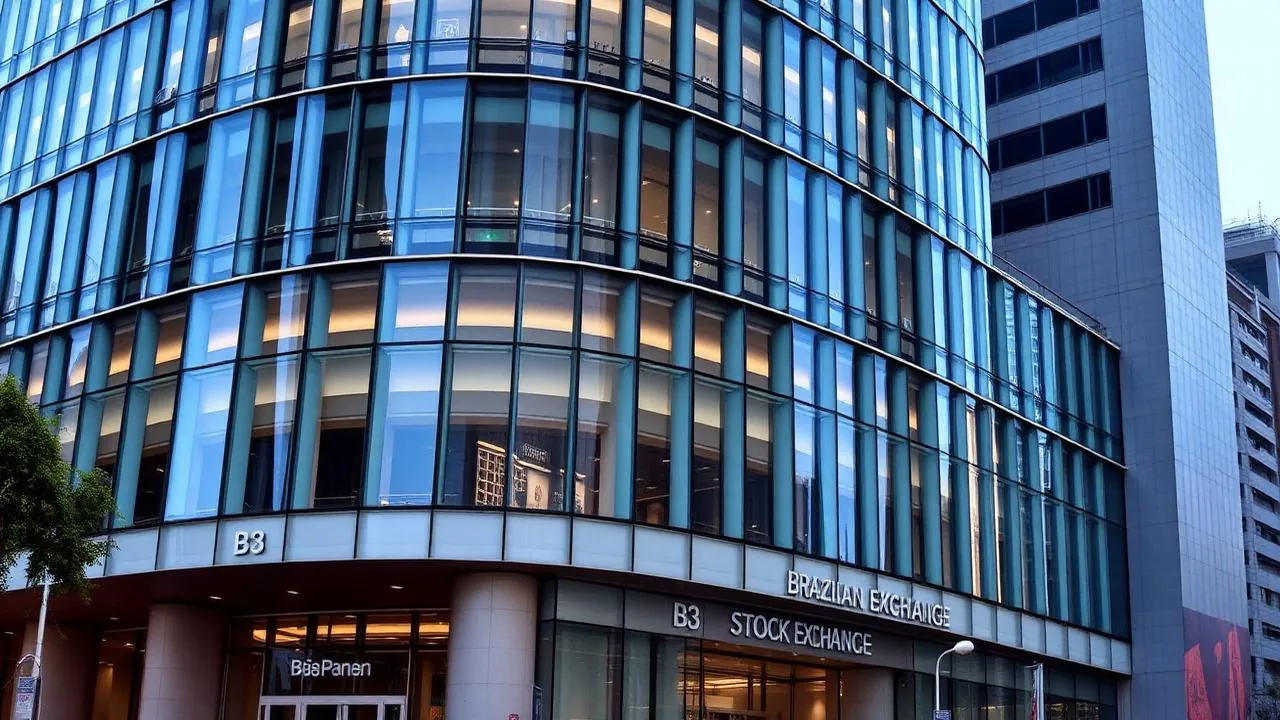
Law 15,042, signed in December 2024, establishes Brazil's regulated carbon market, paving the way for a cap-and-trade system for greenhouse gas emissions. The legal framework reflects Brazil's commitment to its climate objectives under the Paris Agreement, and the growing global pressure to decarbonise.
On the political and historical context, it is worth noting that debate over a Brazilian carbon market has dragged on for more than a decade, through several bills and intense argument between academia, industry and civil society. The final version of Law 15,042 represents an effort at reconciliation between those views, seeking a model that both stimulates emission reductions and limits adverse impacts on national industry's competitiveness. Several factors pushed the issue onto the government agenda: the need to attract green investment, to align with international practice, and to answer the expectations of consumers and investors who are increasingly conscious of ESG questions.
In essence, the SBCE establishes a cap-and-trade regime for GHG emissions, with the primary aim of internalising the cost of pollution and encouraging companies to invest in cleaner technologies and processes. The SBCE page tracks the regulation as it emerges.
Timeline
SBCE implementation will be gradual, in distinct phases, to secure an orderly transition and limit economic disruption. Companies should follow this timeline closely to plan their actions.
- Regulation phase (2025-2026). This period is for publishing the decrees and ministerial ordinances detailing the SBCE's operating rules. That includes the precise definition of the sectors covered, the emissions calculation methodology, the initial caps, the rules for allocating allowances, how auctions work, the eligibility criteria for offsets, and the monitoring, reporting and verification (MRV) system. The market's most critical parameters get set here.
- Transition phase (2027-2028). A period of testing and adaptation is expected. Companies subject to the regime should already be reporting emissions under the established methodologies, without yet being subject to obligations to buy or surrender allowances. This phase is decisive for organisations to adjust internal processes, consolidate their GHG inventories and fully understand the compliance requirements. It is during this period that first allowance allocations may be simulated or made on a test basis, letting the market begin to form price expectations.
- Full operation (2028-2030). From this point the SBCE should be fully operational, with companies obliged to meet their emission limits, whether through direct reduction, buying allowances in the market or using carbon credits (offsets). Penalties for non-compliance, including fines and sanctions, will apply under the law. The 2028-2030 range suggests a possible staggered introduction of sectors, or a progressive adjustment of caps and of the split between free allocation and auctioning.
The timeline gives a reasonable horizon for preparation, but the complexity of compliance means work should start as soon as possible.
Who is required to take part
Law 15,042 sets clear criteria for mandatory participation, focused on the largest emitters. It is vital that your company assesses its position against those thresholds.
- Full obligation (above 25,000 tCO₂e a year). Companies emitting more than 25,000 tonnes of CO₂ equivalent a year are subject to full participation. They will have to monitor, report and verify their emissions, acquire or receive emission allowances, and surrender the right number of allowances at the end of each compliance period to cover their emissions. These are the market's priority participants.
- Mandatory reporting without a cap (10,000 to 25,000 tCO₂e a year). Companies whose annual emissions fall in that band have to report emissions annually, but are not subject to caps and therefore not obliged to buy allowances. The requirement is there to collect data for future expansion or adjustment of the system, and to familiarise those companies with reporting and MRV.
- Sectors covered. The law provides for initial coverage of the most emissions-intensive sectors:
- Industry: steel, cement, pulp and paper, chemicals, petrochemicals and other energy-intensive industrial processes or processes with significant process emissions.
- Power generation: primarily fossil-fuelled thermal plants.
- Transport (large fleets and heavy freight): there is debate about how to include this sector, but emissions from large fleets and heavy freight are potential targets at later stages.
- Agriculture and livestock: specific segments with high methane and nitrous oxide emissions, such as large-scale beef and dairy production.
- Solid waste: landfills emitting methane.
The exact list of sectors, subgroups and tCO₂e thresholds will be set in the implementing decrees. Companies in these sectors would be prudent to assess their emissions proactively, to see whether they fall into the full-obligation category.
Cap-and-trade vs offsetting: how it works
The SBCE adopts a hybrid system combining cap-and-trade with the option of offsets. Understanding that distinction is fundamental to planning a compliance strategy.
- Cap-and-trade.
- The cap. The government sets a total maximum of permitted emissions for the regulated sectors over a given period. That cap falls gradually over time to secure decarbonisation.
- Emission allowances. The total cap is divided into emission permit units, or allowances, where each allowance equals, say, one tonne of CO₂e.
- Allocation. Allowances are distributed to regulated companies in two main ways:
- Free allocation (grandfathering). Part of the allowances may be distributed free, generally on the basis of emissions history or intensity benchmarks. The mechanism is there to soften the initial economic shock and maintain competitiveness, particularly for sectors exposed to international competition (carbon leakage risk).
- Auctions. Another part is auctioned. Companies have to buy those allowances to cover their emissions, creating a market price for carbon. Auction revenue can fund decarbonisation programmes or offset costs in other sectors.
- Trading. The essence of the system is that companies reducing emissions below their allocated allowances can sell the surplus to companies that missed their targets and need more allowances. That trade creates an economic incentive for innovation and for reducing emissions where it is most cost-effective.
- Compliance. At the end of each compliance period, companies have to surrender allowances equal to their verified emissions. Failing to surrender enough triggers financial penalties.
- Offsetting (carbon credits).
- Definition. Offsets, or carbon credits, represent GHG reductions or removals achieved outside the emissions directly regulated by the cap-and-trade for obligated companies. They come from projects that demonstrably avoid or remove emissions: renewable energy, reforestation, forest conservation (REDD+), energy efficiency in small and mid-sized companies, and so on. Each credit generally corresponds to one tonne of CO₂e.
- How they can be used. Law 15,042 is likely to allow companies to use offsets to meet part of their compliance obligation, subject to a percentage cap. The expectation is a limit of up to 15%, a level frequently seen in other regulated markets worldwide.
- The conceptual difference. Cap-and-trade allowances are permissions to emit, created by the regulator within a predefined cap; offsets are credits for emission reductions that have already occurred and are additional to a business-as-usual scenario. Including offsets in the SBCE is intended to give companies more flexibility in compliance, lower compliance costs and encourage investment in mitigation projects in sectors the cap does not directly regulate.
Combining the two mechanisms creates a dynamic market, where the carbon price is set by the interaction between the supply of allowances (auctions and free allocation) and offsets, and companies' demand to meet their obligations.
The role of the GHG inventory in preparing
For any company in, or potentially in, SBCE scope, producing an auditable corporate greenhouse gas inventory is not merely good practice, it is a fundamental and unavoidable precondition for compliance.
- The foundation of measurement. The GHG inventory is the base the whole SBCE structure rests on. Without accurate, consistent measurement of emissions, it is impossible to determine whether a company is above or below the participation threshold, how many allowances it needs to buy, or whether it has a surplus to sell.
- The GHG Protocol standard. The GHG Protocol is the internationally recognised and most widely used methodology for quantifying and reporting GHG emissions. It gives clear guidance for calculating Scope 1, 2 and 3 emissions. For the SBCE, the initial priority is rigorous quantification of:
- Scope 1 (direct emissions): emissions from sources owned or controlled by the company (fossil fuel combustion in boilers, owned vehicles, industrial processes, refrigerant leaks).
- Scope 2 (indirect emissions from purchased energy): emissions from generating the electricity, steam, heat or cooling the company consumes but that a third party produces.
- Auditability and verification. Law 15,042 will require GHG inventories to be audited by independent, accredited third parties. That secures the credibility, accuracy and integrity of the data, preventing fraud and making companies comparable. An inventory prepared in line with the GHG Protocol makes the audit process significantly easier.
- Baselines and projections. The initial inventory serves as the company's baseline. From it, you can:
- Assess compliance. Determine whether the company's emissions fall below or above the established cap.
- Identify reduction opportunities. The inventory details the main emission sources, letting management see where reduction effort will be most effective and cost-effective.
- Project allowance needs. On the basis of production and efficiency projections, companies can estimate future allowance purchases or their capacity to generate surpluses for sale.
Without a robust, auditable GHG inventory, a company cannot take part in the SBCE, which carries financial and reputational penalties. The GHG inventory is the precondition for everything that follows.
The difference between the SBCE and the voluntary market
It matters to distinguish the regulated carbon market (SBCE) from the voluntary carbon market, because they operate under different logics, objectives and rules.
| Characteristic | SBCE (regulated market) | Voluntary market |
|---|---|---|
| Nature | Mandatory (a legal obligation) | Voluntary (a company decision, for ESG or reputational reasons) |
| Who is obliged | Companies exceeding the established emission thresholds | Any company or individual |
| Rulemaking | Law 15,042, government decrees and ordinances | Private standards (VCS, Gold Standard, ACR, Plan Vivo) |
| Asset type | Emission allowances (permits to emit) and regulated offsets | Voluntary carbon credits (emission reduction or removal) |
| Prices | Set by supply and demand under a cap. Tend to be higher and more stable. Influenced by government policy. | Set by supply and demand in private markets. More volatile and generally lower. Influenced by market trends and reputation. |
| Penalties | Severe financial fines for non-compliance, sanctions, reputational consequences. | No direct legal penalties. Reputational risk from greenwashing or inaction. |
| Accepted standards | To be defined by the regulation. Likely to require robust international certification and compatibility with the SBCE's MRV system. | Various private standards (VCS, Gold Standard) securing additionality, permanence and verifiability. |
| Primary objective | Meeting national climate targets, decarbonising the economy through carbon pricing. | Voluntary portfolio decarbonisation, carbon neutrality, brand image, attracting ESG investors. |
| Transparency and MRV | Legal requirement for rigorous, auditable monitoring, reporting and verification. A centralised government platform. | MRV defined by private certification standards, with variable transparency. Records held on certifier platforms. |
In short: the SBCE is a compliance market, where participation is compulsory for certain emitters, with penalties for non-compliance and prices governed by allowance scarcity and regulatory requirements. The voluntary market is a complement, where buying credits is a strategic choice for ESG or reputational objectives. They can interact (voluntary offsets may be accepted as regulated offsets up to a limit), but they are fundamentally distinct.
What to do now to prepare
Even though full SBCE operation is only expected in 2028-2030, preparation should start now. Planning ahead can be a significant competitive advantage and avoids last-minute costs.
- 1. A robust, auditable GHG inventory.
- Data collection. Start or improve systematic, continuous collection of data on energy and fuel use, industrial processes, waste management and more, covering at least Scopes 1 and 2.
- GHG Protocol methodology. Build your inventory to GHG Protocol guidance. That includes selecting appropriate emission factors, ideally Brazilian factors where available and validated.
- External verification. Engage an independent, accredited audit firm to verify your inventory annually. That secures credibility and also prepares the internal team for the SBCE's future verification requirements.
- The first step is the GHG inventory.
- 2. Establishing a baseline and projections.
- On the basis of historical inventories (at least two to three years), set an emissions baseline.
- Develop emissions projection scenarios for the next 5 to 10 years, taking account of growth plans, technology investment and energy efficiency targets.
- 3. Building an internal team and assigning responsibility.
- Identify a lead or a dedicated team for carbon, responsible for continuous monitoring, reporting, compliance and strategy.
- Train that team on the SBCE's nuances, emission reduction technologies and carbon management best practice.
- 4. Mapping emission reduction opportunities.
- Analyse your emission sources (identified in the inventory) in detail to find projects and technologies that can cut Scope 1 and 2 emissions. Examples include energy efficiency, switching to renewable energy, industrial process optimisation and methane capture.
- Assess the technical and economic viability of those opportunities, focused on cost-benefit per tonne of CO₂e avoided.
- 5. Legal and strategic advice.
- Engage specialist legal advice to follow SBCE regulation and assess the specific impacts on your company. That covers allowance allocation, auction rules, offset eligibility and penalty risk.
- To turn a reduction project into a financial scenario, see carbon pricing.
- 6. Tracking carbon price trends.
- The SBCE carbon price is uncertain, but tracking prices in other regulated markets (EU ETS, California) and in the voluntary market offers useful insight for forming expectations and financial modelling.
Taking these proactive steps not only secures compliance with future regulation, it can turn the transition to a low-carbon economy into a strategic opportunity.
How Mangue Tech helps
At Mangue Tech we understand the complexity and the urgency of preparing for the SBCE. Our platform and services are designed to simplify your company's path to compliance and to optimising carbon costs.
- Automated GHG inventory. We offer a solution that automates the collection, processing and calculation of your GHG inventory in line with the GHG Protocol. That sharply reduces the time and cost of producing it, while securing accuracy and auditability.
- Brazilian emission factors. Our algorithms use and continuously update emission factors specific to the Brazilian context, for maximum accuracy and relevance to your operations in the country.
- Carbon pricing scenarios. From your emissions data and projections, our platform can simulate different carbon price scenarios, letting you assess the potential financial impact of the SBCE, plan budgets and identify the cost-benefit of reduction projects. See carbon pricing.
- Compliance preparation. We go beyond the inventory. We help your team understand reporting requirements, MRV and how the market works, so you are ready to deliver the required data on time and in the format the regulation demands.
The SBCE is more than an environmental agenda. It is financial strategy and risk management, and the clock on preparation has already started.
- Produce an auditable GHG inventory following the GHG Protocol now
- Establish an emissions baseline and project scenarios for the next 5-10 years
- Build an internal team dedicated to carbon
- Assess emission reduction opportunities and the cost per tCO₂e avoided
Perguntas frequentes
When does the SBCE start operating?+
Detailed regulation is expected in 2025-2026, with full operation between 2028 and 2030.
Does my company have to take part?+
If your emissions exceed 25,000 tCO₂e a year, yes. Between 10,000 and 25,000, there is a reporting obligation without a cap.
Can I use voluntary credits under the SBCE?+
The law provides for offsets, probably capped at 15% of the obligation. Eligibility criteria will be set in the regulation.
- SBCE
- Sistema Brasileiro de Comércio de Emissões, Brazil's regulated carbon market
- Cap-and-trade
- An emissions trading system where a maximum limit is divided into tradable allowances
- tCO₂e
- Tonne of CO₂ equivalent, the standard unit for measuring GHG emissions
- MRV
- Monitoring, Reporting and Verification, the emissions control system
- Lei 15.042, de 11 de dezembro de 2024 · Sistema Brasileiro de Comércio de Emissões · Presidência da República
Frameworks mencionados neste artigo
IFRS S1 & S2 Roadmap
The 12 decisions your CFO has to make before 2027. Free.