Skip to content

ESG materiality: financial and double, aligned with the auditor

Identify the topics that matter to investors and the material impacts on society and the environment. Grounded in CSRD, GRI, IFRS S1/S2 and CVM 193.

Companies that trust Mangue Tech

Banco do Brasil
Rock in Rio
Hotmart
Petlove
Multilaser
Eztec
Comerc
A.C. Camargo
Grupo Marista

Consulting + Platform

Operational data becomes auditable ESG indicators.

Specialist consulting that understands ESG materiality. A platform that automates the calculation, versions the data and exports it in the format the regulator requires.

Consultoria

ESG data and compliance management, with a specialist who knows your sector.

Plataforma

Our own software, automating calculations, indicators and exports.

Auditable reports

GHG inventory, decarbonization plan and reports ready for the auditor.

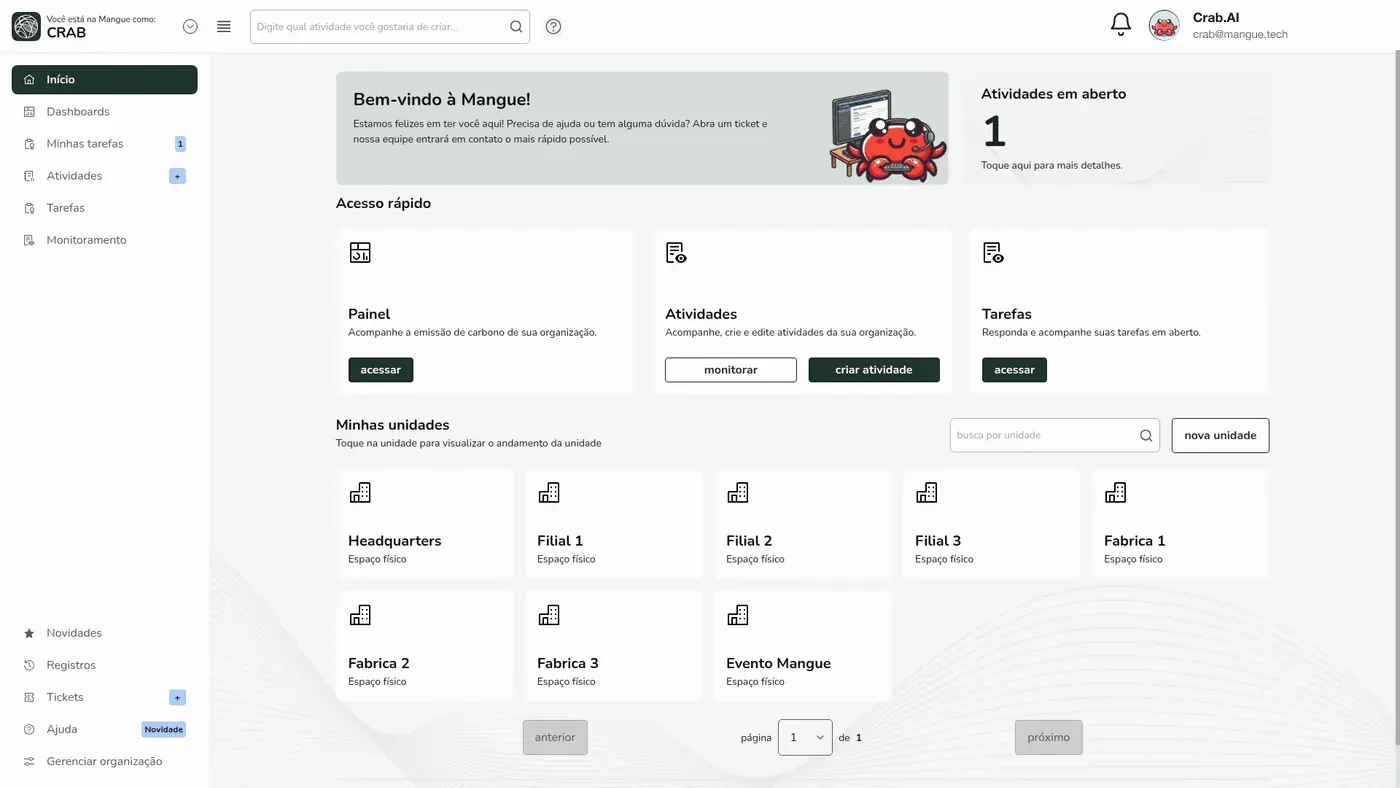
Mangue Tech platform · organization home
90%

Less time

Automated collection vs. manual spreadsheet.

20+

Global frameworks

IFRS, CSRD, CBAM, GRI, SASB, GHG, CDP…

60k+

Emission factors

IPCC, DEFRA, MCTI, EPA, Ecoinvent.

How Mangue works

4 steps. From diagnosis to an auditable report.

01

Diagnosis

Find out which ESG risks affect your business and what the regulator will require.

02

Estrutura

Organized data, defined processes and everything ready for any verification.

03

Operation

Emission calculations, decarbonization targets and continuous monitoring.

04

Auditable reports

Active compliance with IFRS, CSRD, CBAM, GRI, SASB and GHG Protocol.

Mangue deliverables for ESG materiality

Every delivery is a complete package: consultant + platform + auditable report. Click to see how we apply it.

Frameworks we apply

The service

What it is.

A materiality analysis is the exercise of identifying and prioritizing the ESG topics that matter to your company. Without a consistent matrix, sustainability reporting turns into a list of good intentions: no investor trusts it, no stakeholder recognizes it.

For public companies in Brazil, CVM Resolution 193/2023 requires reporting aligned with IFRS S1/S2 from fiscal year 2026 on, financial materiality. For companies with a European parent or European clients, CSRD/ESRS requires double materiality (impact plus financial) with limited assurance. Without well-grounded materiality, you pass neither.

We deliver a prioritized matrix of 8 to 12 topics (not 30), with a documented methodology, evidence of stakeholder engagement and a rationale for each topic. The auditor reads it and accepts it. The investor reads it and understands it. The internal team uses it to prioritize.

Delivery

How we deliver.

Step 01

Topic universe: we cross GRI Standards, ESRS E1-E5/S1-S4, SASB for your industry, IFRS S1/S2 and a benchmark of 3 to 5 global peers. Typically 24 to 30 initial candidates.

Step 02

Stakeholder engagement: structured surveys (investors, clients, suppliers, employees), interviews with leadership and community workshops where they apply. No bias, with a defensible sample.

Step 03

Prioritization and matrix: quantitative plus qualitative analysis, classified into impact materiality (outside-in) and financial materiality (inside-out). We deliver the matrix, the documented methodology and the evidence folder.

Users comment

Results at industrial scale.

Technology

“I needed something with a simple interface for the end user. Mangue came in with an eye for simplifying, with other ways to get to the data, it helped a lot.”
Edvania Silva
ESG Manager · Hotmart

Textile industry

“Today we can say we have consistent, organized data that lets us keep improving going forward. That's the platform's main role: giving us visibility into something that wasn't visible to everyone before.”
Thiago Martins
Legal and Compliance Director · Santista

Frameworks involved

Designed for what your auditor requires.

Frequently asked questions

Common questions.

What is the difference between financial materiality and double materiality?

Financial materiality identifies the environmental, social and governance topics that affect the company's value, in line with IFRS S1 and S2, the international sustainability standards. Double materiality, required by the CSRD (the European sustainability reporting directive), adds the company's impacts on society and the environment. The CSRD requires both lenses.

Does a Brazilian company need to do double materiality?

It depends on its exposure to Europe. The CSRD (the European sustainability reporting directive) requires double materiality from companies within its scope: those with a European parent company or European customers. Without that exposure, the usual path is financial materiality, aligned with IFRS S1 and S2, the international sustainability disclosure standards.

Is sustainability reporting mandatory in Brazil?

Not today. Resolution 244 of the CVM, Brazil's securities regulator, published in May 2026, revoked the mandate that Resolution 193/2023 had created. The regime is comply-or-explain: companies that do not publish must justify it. Those that report follow IFRS S1 and S2, and that starts with a defensible materiality matrix.

Who verifies or certifies the materiality matrix?

An external verification body, such as Bureau Veritas, SGS, DNV or TÜV. Mangue Tech prepares and structures the matrix, with a documented methodology and an evidence folder, but does not audit, certify or issue an opinion. Nor does the matrix replace the limited assurance that the CSRD, the European sustainability reporting directive, requires of companies within its scope.

How many topics go into the materiality matrix?

Between 8 and 12 prioritized topics, not 30. The starting point is larger: crossing reporting standards (GRI, ESRS and the SASB standard for your industry), IFRS S1 and S2 and a benchmark of 3 to 5 global peers typically yields 24 to 30 candidates. Prioritization cuts the list with a rationale for each topic.

What is a materiality matrix?

It is the chart that plots how relevant each ESG topic is to the company (financial impact) against how relevant it is to stakeholders or to society and the environment (impact). The topics in the upper right quadrant are the material ones: they define what goes into the sustainability report, the targets and risk management.

What is double materiality?

It is the analysis that looks at both sides at once: how ESG topics affect the company's results (financial materiality, outside-in) and how the company affects people and the environment (impact materiality, inside-out). It is what the CSRD and the ESRS standards require in the European Union.

How do you build a materiality matrix?

In five steps: list candidate topics from GRI, ESRS, your industry's SASB standard and peer companies; hear internal and external stakeholders through surveys and interviews; rate each topic by the company's impact on people and the environment and by its financial effect on the company; place the topics on both axes and set the relevance cut-off; validate with leadership and document the methodology for the auditor. The result usually lands between 8 and 12 topics.
Talk to a specialist

Who answers is who delivers.

Diagnostics, scope and proposal on the same day. Straight with the specialist who will run the project.