REDD+ carbon credits: how they work and how to choose
How the REDD+ forest carbon credit mechanism works, the certification standards, how to assess integrity, and the Mangue Tech + Carbonext partnership.

What REDD+ is (Reducing Emissions from Deforestation and Degradation)
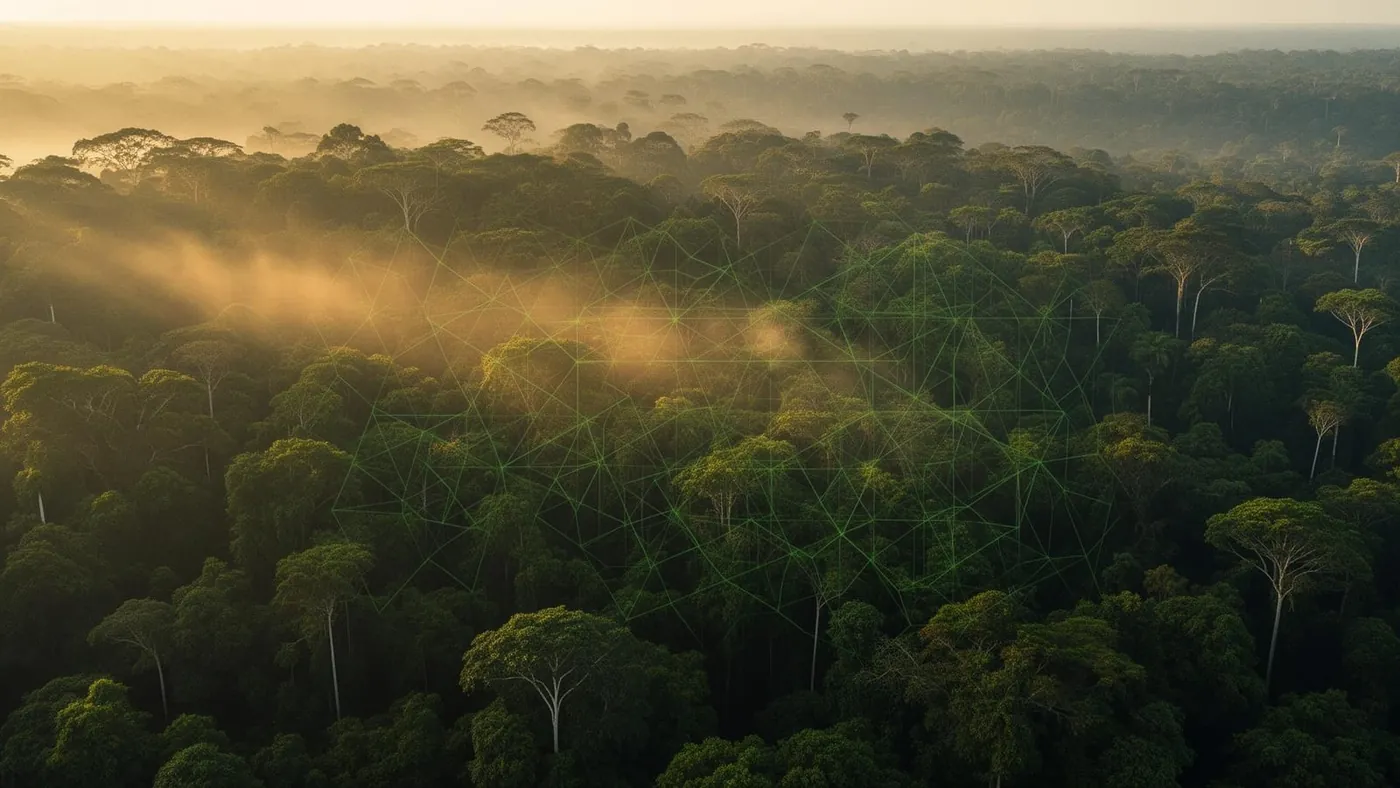
REDD+ is a mechanism under the UN Framework Convention on Climate Change (UNFCCC) that creates financial incentives for conserving tropical forest. The concept is direct: if an area of forest would be cleared without intervention, preventing that clearing represents an emissions reduction that can be quantified and converted into carbon credits.
The "+" in REDD+ signals that the mechanism goes beyond avoided deforestation. It covers reduced forest degradation, conservation of carbon stocks, sustainable forest management and enhancement of carbon stocks (reforestation and restoration).
For Brazil, REDD+ carries singular weight. The country holds around 60% of the Amazon, and deforestation and land-use change account for close to half of national GHG emissions. REDD+ projects in the Amazon are therefore among the most significant in the world in mitigation potential.
But significance does not guarantee quality. The REDD+ market has faced legitimate criticism over additionality, permanence and real benefits. Choosing high-integrity credits means understanding how the mechanism works, and where the risks sit.
How a carbon credit is generated
Generating a REDD+ carbon credit follows a structured process with several stages.
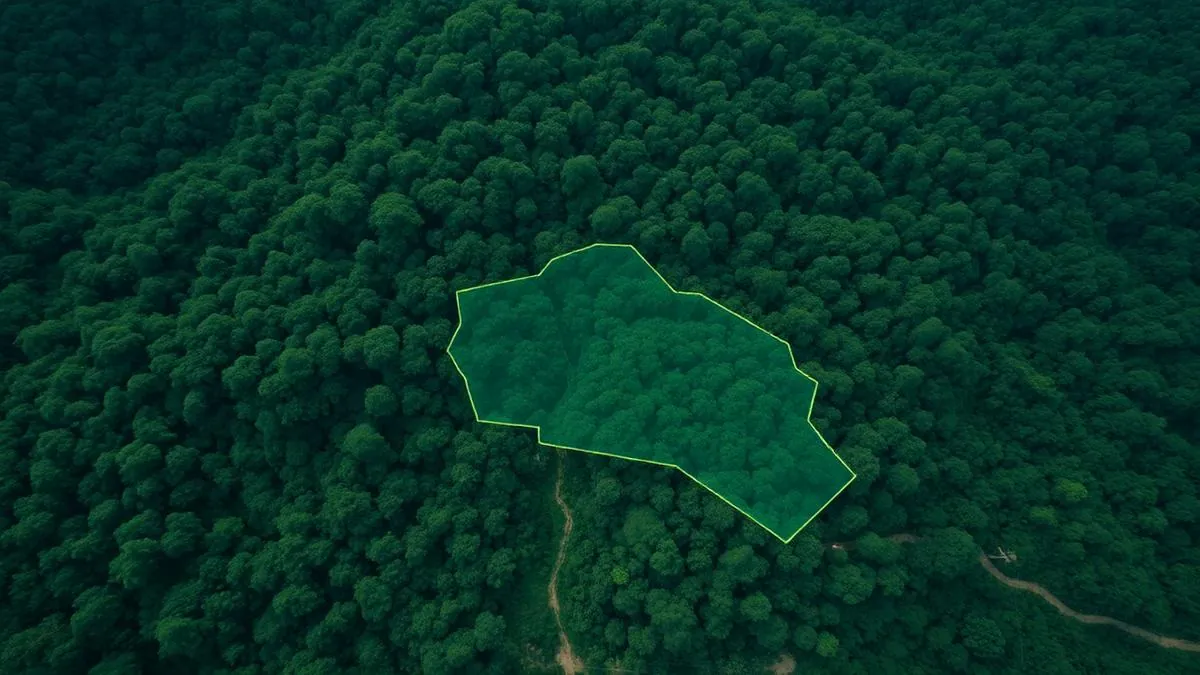
1. Defining the project area. A proponent identifies an area of forest under threat of clearing and establishes the project's geographic boundaries. The area may be privately owned, community-held, or public land under concession.
2. The reference scenario (baseline). The proponent models what would happen without the project: the deforestation rate expected on the basis of historical data, economic pressures, proximity to roads, agricultural expansion and other drivers. That counterfactual is the heart of REDD+: credits represent the difference between the reference scenario and the with-project scenario.
3. Quantifying the carbon. Forest inventories measure biomass per hectare in the project area. Biomass is converted into a carbon stock using conversion factors specific to each forest type. The difference between avoided deforestation (baseline minus actual clearing) and the carbon stock per hectare determines the emissions avoided.
4. Implementing protection activities. The project has to show concrete action to prevent clearing: patrolling, enforcement, income alternatives for communities, satellite monitoring, institutional support.
5. Monitoring, reporting and verification (MRV). Actual deforestation data is compared with the baseline periodically. Independent audits verify that the emission reductions are real, additional and permanent. Once verified, the credits are issued by the certification standard's registry (Verra, Gold Standard and others).
6. Issuance and registration. Each credit receives a unique serial number and is recorded in a public system. When a company buys and retires a credit, it is marked as used and cannot be resold.
Certification standards (Verra VCS, Gold Standard, CCB)
Not all REDD+ credits are equal. A credit's integrity depends on the certification standard and the methodologies applied.
Verra VCS (Verified Carbon Standard). The largest global registry of voluntary credits, with more than 1,800 registered projects. VCS requires additionality (the project would not happen without credit revenue), permanence (buffer pool mechanisms to cover reversals), conservative quantification and independent third-party verification. REDD+ projects under VCS use methodologies such as VM0015 (Avoided Unplanned Deforestation) and the consolidated REDD+ Methodology Framework.
Gold Standard. Originally focused on renewable energy projects, Gold Standard expanded into forests with stricter criteria for social and environmental co-benefits. It requires a verifiable contribution to the UN Sustainable Development Goals and documented community consultation.
CCB (Climate, Community & Biodiversity Standards). It complements VCS by verifying co-benefits across three dimensions: climate, communities and biodiversity. Projects with VCS + CCB certification combine climate credibility with verified social and environmental impact. It is the standard most sought after by demanding buyers.
CORSIA and ICAO. For aviation, CORSIA (the Carbon Offsetting and Reduction Scheme for International Aviation) accepts credits from eligible programmes, including Verra VCS. Airlines using REDD+ credits for CORSIA compliance have to make sure the credits meet the programme's specific criteria.
Social and environmental co-benefits
High-integrity REDD+ carbon credits generate impact beyond climate mitigation.
Social benefits. Well-designed projects create income alternatives for local communities and Indigenous peoples. That can include direct payments, employment in monitoring and management, technical training, access to health and education, and stronger territorial rights. Fair benefit sharing is a central criterion of CCB certification and of Gold Standard.
Environmental benefits. Conserving tropical forest protects biodiversity: the Amazon holds more than 10% of all species on the planet. REDD+ projects also maintain ecosystem services such as water regulation, pollination, erosion control and local climate regulation. TNFD is starting to measure those co-benefits in a standardised way.
Reputational benefits for buyers. Companies that offset residual emissions with high-integrity REDD+ credits demonstrate commitment on both the climate and social agendas. That matters particularly amid growing scrutiny of greenwashing and unsubstantiated environmental claims.
Voluntary market vs regulated market (SBCE)
REDD+ credits trade predominantly in the voluntary carbon market: companies buy credits as a strategic decision, not a legal obligation. That market moved around US$ 2 billion globally in 2023, with REDD+ accounting for a significant share.
The Brazilian picture is changing with the creation of the SBCE, Brazil's emissions trading system. Law 15,042/2024 created a regulated carbon market in Brazil. Although the initial SBCE design focuses on emission allowances in a cap-and-trade style, it envisages limited use of offsets, potentially including REDD+ credits, for compliance.
The interaction between voluntary and regulated markets creates both opportunities and risks. REDD+ credits that meet SBCE criteria may gain value. On the other hand, overlap with national targets (the NDC) can raise double-counting questions that have to be resolved with corresponding adjustments under Article 6 of the Paris Agreement.
How to assess a credit's integrity
Not all REDD+ credits are equal. The following dimensions should be assessed before buying.
Additionality. Would the deforestation have been avoided anyway, without the project? If the area was already protected by law and effectively enforced, the credits are not additional. Look for projects in areas under real, demonstrated clearing pressure.
A conservative baseline. Is the reference scenario realistic? Inflated baselines, projecting more clearing than would actually occur, generate phantom credits. Projects with baselines validated by third parties and consistent with historical data are more reliable.
Permanence. Will the carbon stay stored? Projects in areas with high land-tenure pressure or invasion carry reversal risk. Buffer pool mechanisms (a reserve of credits to cover losses) and continuous monitoring mitigate that risk.
Leakage. Was the deforestation avoided in the project area simply displaced to neighbouring areas? Serious projects include leakage monitoring and discount credits proportionally.
Verified co-benefits. Projects with CCB or Gold Standard certification offer additional assurance of social and environmental impact. Without those certifications, ask for documentary evidence.
Vintage (the credit's year). Older credits may find less acceptance. The market prefers credits from the last five years. Very old credits can signal demand or quality problems.
The Mangue Tech + Carbonext partnership
Mangue Tech offers emissions offsetting through a partnership with Carbonext, one of the largest developers of forest conservation projects in the Brazilian Amazon. Carbonext develops and manages REDD+ projects in areas under high deforestation pressure, with Verra VCS certification and real-time satellite monitoring.
The partnership lets Mangue Tech clients complete the carbon management cycle within a single platform: inventory, reduction targets and offsetting with high-integrity, fully traceable credits.
Each credit is tied to a specific project, with geographic coordinates, a documented baseline, accessible verification reports and a serial number traceable in the Verra registry. The client receives an offset certificate carrying all the provenance information.
- Prioritise credits with dual VCS + CCB certification for maximum integrity and lower reputational risk
- Assess additionality, baseline, permanence and leakage before buying any REDD+ credit
- Offsetting with credits complements real reduction targets, it never substitutes for them
- The Mangue Tech + Carbonext partnership gives access to traceable credits from the Brazilian Amazon
Perguntas frequentes
Are REDD+ credits accepted by SBTi?+
SBTi does not accept offset credits towards reduction targets. Companies can, however, use REDD+ credits to neutralise residual emissions once the targets are met, under the Beyond Value Chain Mitigation framework.
What is the difference between REDD+ and reforestation?+
REDD+ avoids emissions by preventing the clearing of existing forest. Reforestation (ARR: Afforestation, Reforestation and Revegetation) removes carbon from the atmosphere by planting new trees. They are complementary mechanisms.
Can I use REDD+ credits under the SBCE?+
It is not settled yet. SBCE regulation will specify which types of offset are accepted for compliance. The expectation is limited eligibility for high-integrity forest credits.
- REDD+
- Reducing Emissions from Deforestation and Forest Degradation, a mechanism that incentivises forest conservation.
- Additionality
- The criterion ensuring the emissions reduction would not have happened without the carbon project.
- Buffer pool
- A reserve of credits held by the registry to cover any carbon reversals.
- Leakage
- The displacement of emissions from the project area to neighbouring areas.
- VCS
- Verified Carbon Standard, the leading certification standard for voluntary carbon credits, managed by Verra.
- Vintage
- The year in which the emissions reduction associated with the credit actually occurred.
- Verified Carbon Standard · Verra
- Core Carbon Principles · ICVCM
Frameworks mencionados neste artigo
IFRS S1 & S2 Roadmap
The 12 decisions your CFO has to make before 2027. Free.