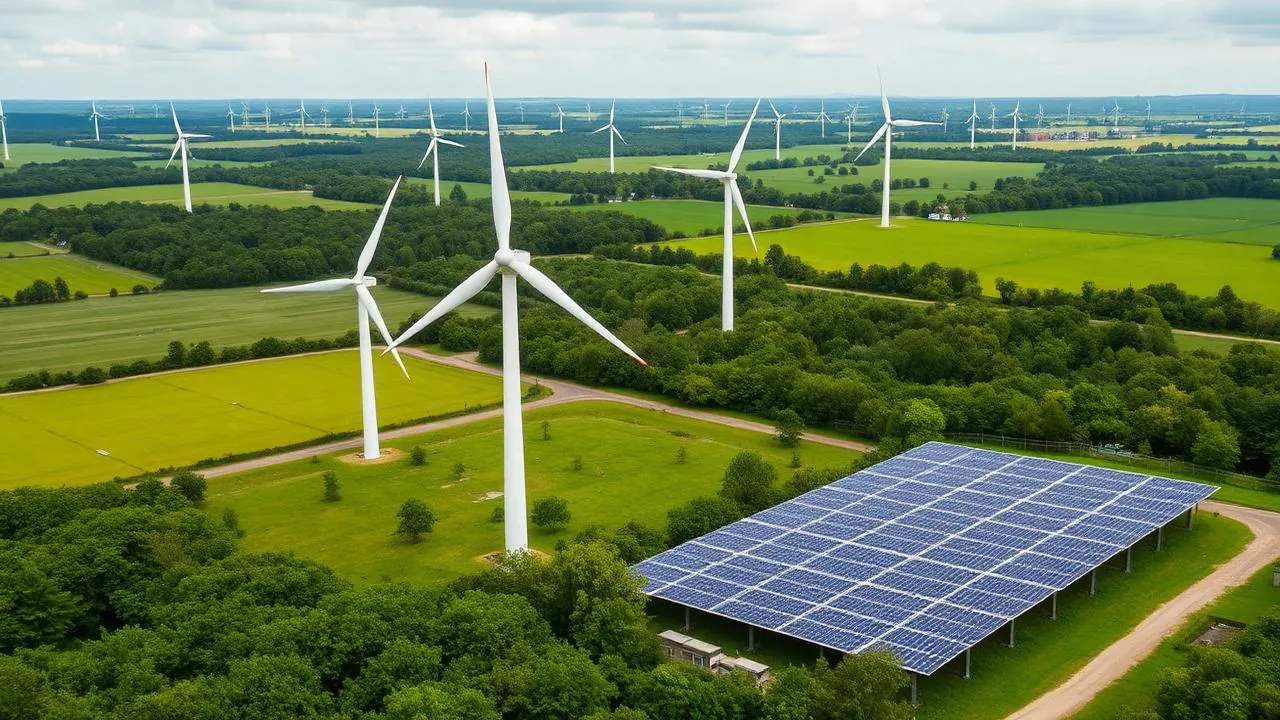
TNFD: nature- and biodiversity-related financial disclosures
A guide to the TNFD: the LEAP approach, recommended metrics, the relationship with CSRD/ESRS E4, and how agribusiness, mining and energy companies should prepare.
What the TNFD is and why it matters
The TNFD is a global initiative guiding organisations to report information about their nature-related risks and opportunities. Its main aim is to steer capital towards nature-positive outcomes, so that financial institutions and other stakeholders can make better-informed decisions. Its fundamental premise is that biodiversity loss and ecosystem degradation represent material financial risks to companies and to the stability of the global financial system.
The global economy's dependence on ecosystem services is vast and often underestimated. Crop pollination, water purification, climate regulation and soil formation are services nature provides free of charge and that are vital to producing goods and services. Degrading them can lead to:
- Transition risks: regulatory change, shifting consumer preference and technological innovation that penalise nature-damaging activities.
- Physical risks: direct asset loss or operational disruption from nature-related events, such as drought, flooding or the collapse of pollinator populations.
- Reputational risks: damage to the company's image, consumer boycotts and loss of talent because of perceived environmental irresponsibility.
- Systemic risks: the interconnection of all these risks can produce economic instability at macro scale (see TNFD).
By providing a standardised disclosure framework, the TNFD equips companies to identify, assess and mitigate those risks, while exploring opportunities for innovation and investment in nature-based solutions.
The LEAP approach
The TNFD's guidance for assessment and disclosure is organised into an iterative, holistic process known as LEAP (Locate, Evaluate, Assess, Prepare). The method is designed to be adaptable and applicable to organisations of different sizes and sectors.
Locate: where the value chain meets nature
The Locate phase involves identifying the organisation's interfaces with nature across its whole value chain. That covers direct operations, the upstream supply chain and downstream distribution. The aim is to understand where and how the company's activities interact with ecosystems, species and ecosystem services.
- Geolocation. Map assets, operations and suppliers against areas of high biodiversity, critical ecosystems or regions where natural resources are scarce.
- Value chain analysis. Understand the company's dependencies and impacts at each stage, from raw material extraction to product disposal.
- Qualitative assessment. Use available data, stakeholder mapping and interviews to identify the most significant interactions.
Geospatial databases and supply chain mapping software help here, to visualise the interfaces and prioritise areas of focus.
Evaluate: dependencies and impacts
Once the interfaces are located, the Evaluate phase focuses on quantifying and qualifying the organisation's dependencies on and impacts to nature.
- Dependencies. Assess the degree to which the company depends on ecosystem services to operate. Examples include dependence on fresh water for industrial processes, fertile soils for agriculture or coral reefs for coastal tourism. Disrupting those services can generate significant costs or halt operations.
- Impacts. Analyse how the organisation's activities affect nature. That can include water and air pollution, soil degradation, deforestation, habitat loss and greenhouse gas emissions. Impacts can be direct or indirect, positive or negative, and should be categorised to understand their magnitude and scope clearly.
For this phase, tools such as UNEP FI's ENCORE (Exploring Natural Capital Opportunities, Risks and Exposure) can be valuable. ENCORE lets financial institutions and companies understand their dependencies on and impacts to natural capital, mapping economic sectors against ecosystem services.
Assess: risks and opportunities
The Assess phase involves identifying and evaluating the financial risks and opportunities arising from the organisation's dependencies on and impacts to nature.
- Risks. Classify them as physical, transition or reputational, considering probability and magnitude.
- Physical risks: events such as severe drought affecting water availability for production, or flooding damaging infrastructure.
- Transition risks: regulatory change imposing land use restrictions, pollution fines, or new charges on natural resources.
- Reputational risks: public criticism, activist action, or loss of customer and investor confidence over nature-damaging practices.
- Opportunities. Identify the possibilities for generating value through nature-positive action.
- Product and service innovation: developing more sustainable products or using technologies that reduce environmental impact.
- Operational efficiency: cutting water, energy and raw material use, generating cost savings.
- Access to new markets: meeting growing demand for products and services that support biodiversity conservation.
- Improved resilience: investing in green infrastructure that protects against extreme weather.
This stage takes robust financial analysis to quantify the potential financial impact of the risks and the value of the opportunities.
Prepare: strategy and disclosure
Finally, the Prepare phase involves building a strategy to manage the identified risks and capitalise on the opportunities, culminating in disclosure of the relevant information.
- Strategic response. Develop and implement action plans to mitigate risk (investing in ecosystem restoration, switching to more sustainable suppliers) and capture opportunity (developing new ecological products, expanding into low-impact markets).
- Metrics and targets. Set clear metrics and ambitious targets to monitor progress and the effectiveness of the actions taken.
- Governance. Define clear responsibilities for managing nature-related matters at every level of the organisation, including the board.
- Disclosure. Publish the relevant information under the TNFD recommendations, covering:
- Governance: how management and the board oversee nature.
- Strategy: how nature-related risks and opportunities affect the organisation's business strategy.
- Risk and impact management: the processes for identifying, assessing and managing risks and impacts.
- Metrics and targets: the metrics used to assess risks and opportunities.
Continuous transparency and effective communication are essential to building stakeholder trust and demonstrating the organisation's commitment to sustainability.
Recommended metrics and indicators
The TNFD proposes a set of metrics and indicators to support disclosure, split into core metrics and additional metrics. The aim is to provide a common base for comparability while allowing flexibility for specific sectors and contexts.
Core metrics vs additional metrics
- Core metrics. The metrics the TNFD considers essential for every organisation to disclose, regardless of sector. They give a comprehensive view of the most relevant risks, opportunities, dependencies and impacts.
- Additional metrics. Metrics that may be particularly relevant to specific sectors, or to organisations with unique nature exposure. They complement the core metrics and allow more detailed disclosure.
Indicators of dependency, impact, risk and opportunity
The indicators are designed to measure the different facets of a company's relationship with nature.
- Dependency:
- Annual volume of water used in areas of high water stress.
- Share of raw materials sourced from ecosystems of high biodiversity value.
- Potential cost of replacing ecosystem services (water treatment costs to replace natural purification, for instance).
- Impact:
- Land use area and ecosystem conversion (hectares cleared, area affected by mining).
- Air and water pollutant emissions in sensitive areas.
- Number of threatened species affected by operations.
- Volume of waste generated and how it is disposed of in natural ecosystems.
- Risk:
- Share of revenue or assets exposed to high biodiversity risk areas.
- Potential cost of regulatory fines or litigation over environmental damage.
- Cost of operational disruption from nature-related events (drought, flooding).
- Number of significant environmental incidents recorded.
- Opportunity:
- Revenue generated from products or services with a positive nature impact.
- Investment in nature-based solutions (reforestation, mangrove conservation).
- Operating cost reduction through better resource efficiency (water, energy).
- Number of strategic partnerships for biodiversity conservation.
Concrete examples by sector
- Agribusiness:
- Dependency: water volume for irrigation, soil fertility.
- Impact: land cleared for agricultural expansion, pesticide use, methane emissions.
- Risk: crop loss from climate change, regulatory restrictions on agrochemicals.
- Opportunity: developing drought-resistant varieties, regenerative agriculture, sustainability certification.
- Mining:
- Dependency: access to water resources, soil regulation services.
- Impact: ecosystem degradation, soil and water contamination, species loss.
- Risk: local community opposition, fines for tailings leaks, operational disruption from natural disasters.
- Opportunity: rehabilitating mined areas, low-impact extraction technology, investing in renewable energy for operations.
- Energy (hydropower, offshore wind):
- Dependency: water flow for hydro generation, wind for turbines.
- Impact: alteration of river ecosystems, impact on birds and bats, changes to marine currents.
- Risk: prolonged drought, environmental restrictions on new projects, impacts on marine life.
- Opportunity: developing low-impact project designs, research into environmental monitoring technology, partnerships for local ecosystem restoration.
Relationship with CSRD/ESRS E4
The European Union's Corporate Sustainability Reporting Directive (CSRD) and its European Sustainability Reporting Standards (ESRS) are key regulatory developments that align with and complement the TNFD. ESRS E4 (Biodiversity and Ecosystems) is particularly relevant, setting detailed requirements for biodiversity-related disclosure by companies in CSRD scope.
How the TNFD and ESRS E4 complement each other
The TNFD offers a voluntary global framework for reporting entities, while ESRS E4 is a specific regulatory requirement for companies operating in or into the EU. The good news is that there is a high degree of interoperability between them.
- Aligned principles. Both share principles such as double materiality (financial impacts and impacts on biodiversity) and the importance of a value chain approach.
- Similar structure. ESRS E4 follows a structure much like the TNFD's, covering governance, strategy, management of impacts and risks/opportunities, and metrics and targets. An organisation already implementing the TNFD's LEAP methodology therefore has a solid base for meeting ESRS E4 requirements.
- Detail and specificity. ESRS E4 is more prescriptive and detailed about disclosure, while the TNFD offers more general, adaptable guidance. Companies using the TNFD as a base can adapt their disclosures to ESRS E4's specifics. The definitions and scope of biodiversity and ecosystems in ESRS E4, for example, are comprehensive and consistent with the TNFD's approach.
- Interoperability. The TNFD's technical advisers and EFRAG, the European group responsible for developing the ESRS, worked together to maximise interoperability. The aim is to lighten the reporting burden for companies that will have to meet both. By adopting the TNFD, European companies are largely preparing for ESRS E4 compliance.
In short, implementing the TNFD recommendations can be an effective step for European companies preparing for the mandatory requirements of ESRS E4. The TNFD works as a practical guide for shaping strategy and internal processes, while ESRS E4 sets the minimum disclosure standard and the format needed for compliance.
The sectors most affected
Nature degradation and biodiversity loss do not affect every sector equally. Some are intrinsically more dependent on nature, or cause more significant impacts, which makes them a priority for TNFD disclosure.
Agribusiness (deforestation, land use)
Agriculture is one of the main drivers of global biodiversity loss. Its activities depend heavily on healthy ecosystems for production: soil fertility, pollination, water availability.
- Specific risks:
- Physical: extreme climate variation affecting crop productivity (drought, flooding), pests and diseases proliferating in degraded environments, collapse of pollinator populations.
- Transition: stricter regulation of pesticide and fertiliser use, zero-deforestation targets, consumer demand for low-impact products, sanctions on supply chains linked to clearing.
- Reputational: activist campaigns against unsustainable practice, exclusion by investors and buyers for lack of sustainability evidence.
- Opportunities:
- Adopting regenerative practices that improve soil health and biodiversity.
- Sustainability certification that opens new markets and premiums.
- Building more resilient and traceable supply chains.
Mining (ecosystem impact)
Mining has a direct, transformative impact on ecosystems, through landscape alteration, waste disposal and water consumption.
- Specific risks:
- Physical: contamination of water bodies and soils, habitat loss leading to local species extinction, geological destabilisation that can cause landslides.
- Transition: regulatory restrictions on opening new mines in sensitive areas, rising mitigation and environmental recovery costs, metal recycling technology reducing demand for virgin mining.
- Reputational: community protest, loss of the social licence to operate, divestment by ESG-screened funds.
- Opportunities:
- Using low-impact technology.
- Investing in the recovery and restoration of mined areas.
- Developing circular economy strategies for minerals.
Energy (hydropower, offshore wind)
The energy sector, green sources included, can have significant nature impacts.
- Hydropower:
- Risks: alteration of river ecosystems, fish migration, reservoir sedimentation, impacts on riverside communities, drought affecting generation capacity.
- Opportunities: modernising existing plants to mitigate impacts, rigorous environmental impact assessment for new projects.
- Offshore wind:
- Risks: impact on seabirds and bats, underwater noise affecting marine life, changes to currents and habitats.
- Opportunities: turbine design that minimises impact, advanced environmental monitoring, marine spatial planning to avoid sensitive areas.
All of these sectors, along with finance, real estate, food and drink, and manufacturing, should run detailed assessments to understand their exposure and report under the TNFD.
How to start a TNFD assessment
Starting a TNFD assessment can look complex, but a set of practical steps simplifies the process and makes it effective.
Practical steps: map dependencies, use tools such as ENCORE and IBAT, run a nature materiality analysis, set governance
- Leadership engagement and governance. The first fundamental step is securing commitment from senior management and the board. Nature has to be built into strategy and executive decision-making. Appoint someone responsible for TNFD implementation and set up a governance committee including sustainability and finance specialists.
- Map primary dependencies and impacts.
- Identify assets and operations. List all the company's operations, assets and geographic locations.
- Analyse the value chain. Extend the analysis upstream (suppliers) and downstream (distribution, product use, disposal). Where and how do the company's activities interact with nature?
- Data sources. Collect data on natural resource use (water, soil), emissions, waste disposal and the location of operations relative to biodiversity areas.
- Use supporting tools.
- ENCORE (Exploring Natural Capital Opportunities, Risks and Exposure). Developed by UNEP FI, this tool helps identify dependencies on and impacts to ecosystem services across economic sectors. It helps prioritise areas of focus.
- IBAT (Integrated Biodiversity Assessment Tool). A mapping tool letting companies and financial institutions compare the location of their operations (or investments) against information on protected areas, threatened species habitats and other biodiversity data. It is essential for the Locate phase and for identifying high-risk areas.
- Geospatial and satellite databases. Satellite imagery and geospatial data help monitor changes in land use, clearing and degradation of natural environments in operating areas or the supply chain.
- Nature materiality analysis.
- Double materiality. Assess not only the financial risks nature poses to the company (financial materiality) but also the company's impacts on nature (impact materiality).
- Stakeholder dialogue. Engage with stakeholders (local communities, NGOs, customers, regulators) to understand their perceptions of the company's impacts and dependencies. That gives a fuller view of the material risks and opportunities.
- Prioritisation. From the analysis, identify the most material nature-related themes, the ones that need the most attention and disclosure.
- Developing strategy and targets.
- Action plan. From the identified risks and opportunities, build a clear action plan with responsibilities, deadlines and resources.
- Setting metrics and targets. Establish quantitative metrics and ambitious targets to monitor progress (cut water use by X%, restore Y hectares of habitat).
- Disclosure and reporting.
- TNFD structure. Prepare the report following the TNFD recommendations for governance, strategy, risk and impact management, and metrics and targets.
- Clarity and transparency. Make sure disclosures are clear, concise, comparable and verifiable.
This iterative process lets organisations deepen their understanding of, and response to, nature-related challenges and opportunities over time.
How Mangue Tech helps
Mangue Tech positions itself as a strategic partner for companies navigating the complexities of nature-related financial disclosure, aligned with the TNFD framework and with regulatory requirements such as ESRS E4. Our support covers several stages of the assessment and compliance journey.
- Assessing nature-related risk across the value chain. We build detailed analyses to identify and map your company's dependencies on and impacts to nature across the whole value chain. We use a systematic approach to locate geographic areas of high biological risk, quantify natural resource use and assess the vulnerability of your operations and suppliers. Our methodology integrates geographic data, biodiversity information (such as IBAT's) and operational data to give a clear picture of your exposure points and interdependence with ecosystems.
- Integration with the emissions inventory. We recognise how the climate and nature agendas interconnect. Our approach integrates the nature risk assessment with your greenhouse gas emissions inventory. That gives a holistic understanding of your company's environmental impact and surfaces synergies in mitigation strategy. Ecosystem restoration, for instance, benefits biodiversity while also contributing to carbon removal and climate resilience.
- Support for ESRS E4 compliance. With growing demand for sustainability reporting in the European Union through the CSRD and its European Sustainability Reporting Standards, we offer technical support so your company's disclosures meet the specific requirements of ESRS E4 (Biodiversity and Ecosystems). Our team is ready to help interpret the standards, collect and organise the required data, and produce reports that satisfy the regulatory requirements, lightening the compliance burden while securing the quality and credibility of the information.
Through a combination of technical expertise, advanced tools and a deep understanding of the regulatory and voluntary frameworks, Mangue Tech equips companies to turn nature challenges into value and resilience.
- Use ENCORE and IBAT as first tools for mapping dependencies and impacts
- Integrate the TNFD assessment with the emissions inventory, because nature and climate are interdependent
- Prioritise sectors with a direct interface with ecosystems (land use, water, biodiversity)
- Start with LEAP's Locate phase to find where the value chain meets nature
Perguntas frequentes
Is the TNFD mandatory?+
The TNFD itself is voluntary, but CSRD/ESRS E4 makes biodiversity disclosure mandatory for companies in scope of the European directive.
What is the difference between the TCFD and the TNFD?+
The TCFD focuses on climate risk. The TNFD widens that to every nature-related risk: biodiversity, water, soil, oceans.
Which tools should I use for a TNFD assessment?+
ENCORE (sector dependencies and impacts), IBAT (biodiversity by location) and STAR (biodiversity footprint) are the most recommended.
- TNFD
- Taskforce on Nature-related Financial Disclosures, the framework for nature disclosure
- LEAP
- Locate, Evaluate, Assess, Prepare, the TNFD's four-phase approach
- ENCORE
- A UNEP-WCMC tool mapping sector dependencies on and impacts to nature
- ESRS E4
- The European reporting standard on biodiversity and ecosystems (part of the CSRD)
- Natural capital
- The stock of natural resources (soil, water, air, biodiversity) that generates ecosystem services
Frameworks mencionados neste artigo
Related services
IFRS S1 & S2 Roadmap
The 12 decisions your CFO has to make before 2027. Free.