










Skip to content

Scope 3 mapping: the 15 GHG Protocol categories

Value chain engagement, primary data collection and quantification of the 15 Scope 3 categories.

Companies that trust Mangue Tech

Banco do Brasil
Caixa
Rock in Rio
Hotmart
Petlove
Multilaser
Eztec
Comerc
A.C. Camargo
Grupo Marista

Consulting + Platform

Operational data becomes auditable ESG indicators.

Specialist consulting that understands scope 3. A platform that automates the calculation, versions the data and exports it in the format the regulator requires.

Consultoria

ESG data and compliance management, with a specialist who knows your sector.

Plataforma

Our own software, automating calculations, indicators and exports.

Auditable reports

GHG inventory, decarbonization plan and reports ready for the auditor.

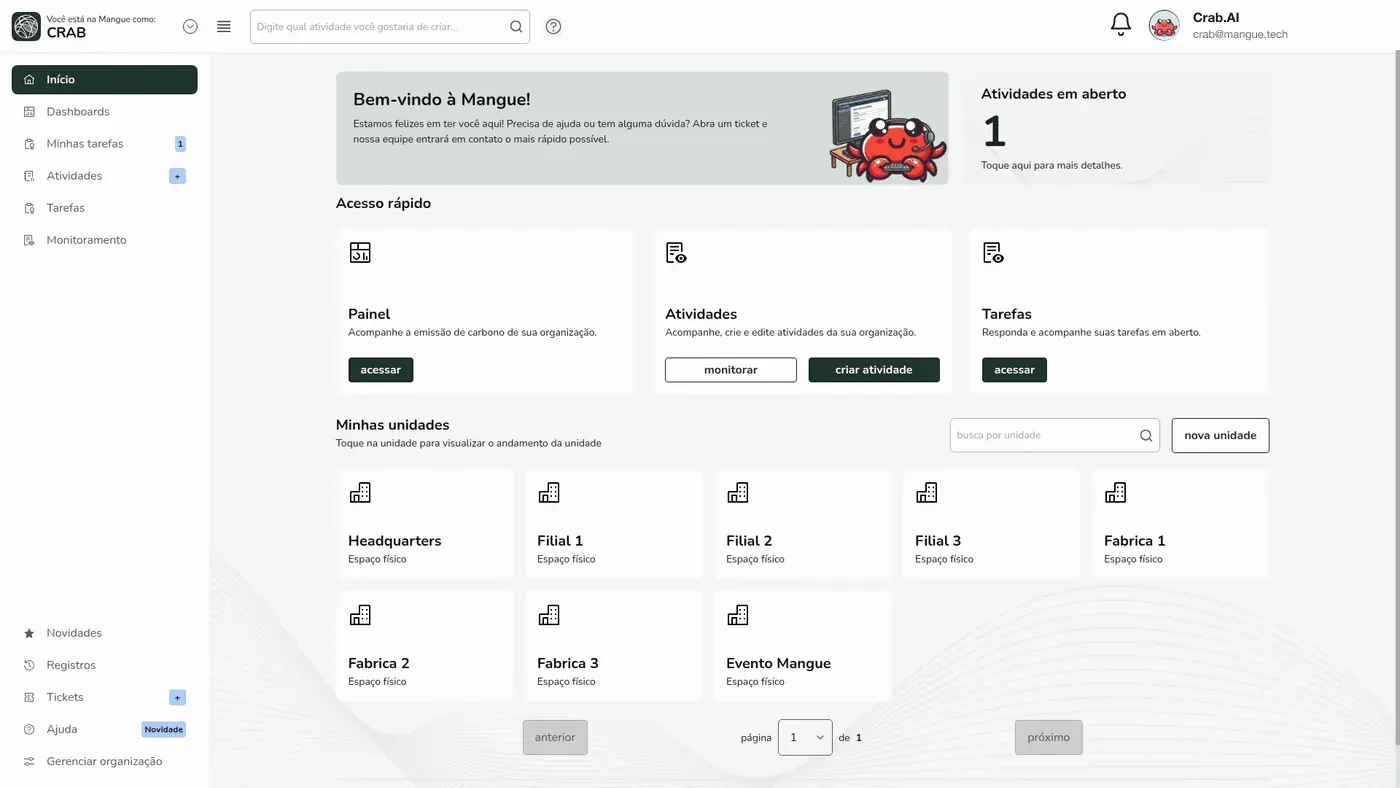
Mangue Tech platform · organization home
90%

Less time

Automated collection vs. manual spreadsheet.

20+

Global frameworks

IFRS, CSRD, CBAM, GRI, SASB, GHG, CDP…

60k+

Emission factors

IPCC, DEFRA, MCTI, EPA, Ecoinvent.

How Mangue works

4 steps. From diagnosis to an auditable report.

01

Diagnosis

Find out which ESG risks affect your business and what the regulator will require.

02

Estrutura

Organized data, defined processes and everything ready for any verification.

03

Operation

Emission calculations, decarbonization targets and continuous monitoring.

04

Auditable reports

Active compliance with IFRS, CSRD, CBAM, GRI, SASB and GHG Protocol.

Mangue deliverables for scope 3

Every delivery is a complete package: consultant + platform + auditable report. Click to see how we apply it.

Frameworks we apply

The service

What it is.

Scope 3 covers every indirect value chain emission that is not purchased electricity (Scope 2). There are 15 categories, upstream (purchased goods, transport, employee commuting, etc.) and downstream (product use, waste treatment, investments, etc.).

For most companies, Scope 3 accounts for 70-90% of total emissions. It is mandatory for SBTi targets, required by CSRD/ESRS and increasingly asked for by CDP. Without Scope 3 mapped, a company does not show a complete view of its footprint.

Mangue Tech prioritizes the material categories (screening), engages suppliers and distributors for primary data collection and applies hybrid methods (spend-based plus activity-based) to maximize data quality within the project timeline.

Delivery

How we deliver.

Step 01

We screen the 15 categories to identify the most material ones. We prioritize where the emissions volume is.

Step 02

We engage critical suppliers and distributors to collect primary data, moving from spend-based estimates to activity-based ones.

Step 03

We consolidate the data on the Mangue platform with an audit trail and deliver the Scope 3 inventory ready for SBTi, CDP and CSRD.

Users comment

Results at industrial scale.

Textile industry

“Today we can say we have consistent, organized data that lets us keep improving going forward. That's the platform's main role: giving us visibility into something that wasn't visible to everyone before.”
Thiago Martins
Legal and Compliance Director · Santista
Engineering

“I feel like things are faster now. To me, efficient means time. The idea is to have a system, a platform, not just a spreadsheet to fill in.”
Oscar Freire
ESG Lead · Voke

Frameworks involved

Designed for what your auditor requires.

By industry

The industries that hire most.

Frequently asked questions

Common questions.

What is the difference between Scope 2 and Scope 3?

Scope 2 is the emissions from purchased electricity. Scope 3 brings together the other indirect value chain emissions, organized into the 15 categories of the GHG Protocol, the greenhouse gas accounting standard: upstream (purchased goods, transport, employee commuting) and downstream (product use, waste, investments).

Do I need to calculate all 15 Scope 3 categories?

All 15 categories go through screening, a triage to find the material ones. Detailed data collection goes to those, where the emissions volume is. Mangue prioritizes what moves the inventory total, instead of spending the same effort across the whole table.

Do I need Scope 3 if I already have an inventory?

For most companies, Scope 3 accounts for 70% to 90% of total emissions. Without it, the inventory does not show the full footprint. It is also a requirement for an SBTi-validated target (Science Based Targets initiative) and for the CSRD, the European sustainability reporting directive, mandatory for companies within its scope.

What if suppliers do not have the data?

Mangue works with a hybrid method. Where the supplier provides primary data, the calculation is activity-based, built on real activity. Where it does not, the estimate starts from the amount spent (spend-based) and is replaced with real data as engagement moves forward. The priority is critical suppliers and distributors.

What is not included in Scope 3 mapping?

Purchased electricity, which is Scope 2, and the direct emissions from your own operation are left out: Scope 3 covers indirect value chain emissions. Mangue also does not certify, audit or verify: it structures the inventory with an audit trail, and the verification opinion comes from an external body (Bureau Veritas, SGS, DNV, TÜV).
Talk to a specialist

Who answers is who delivers.

Diagnostics, scope and proposal on the same day. Straight with the specialist who will run the project.