The Brazilian Sustainable Taxonomy: what it is and what changes
What the Brazilian Sustainable Taxonomy is, how it relates to the EU Taxonomy, its technical screening criteria and the impact on access to green finance.

What the Brazilian Sustainable Taxonomy is
A sustainable taxonomy is a classification system defining which economic activities can be considered environmentally sustainable. It is not a list of good and bad companies, it is a technical framework that assesses specific activities against measurable criteria.
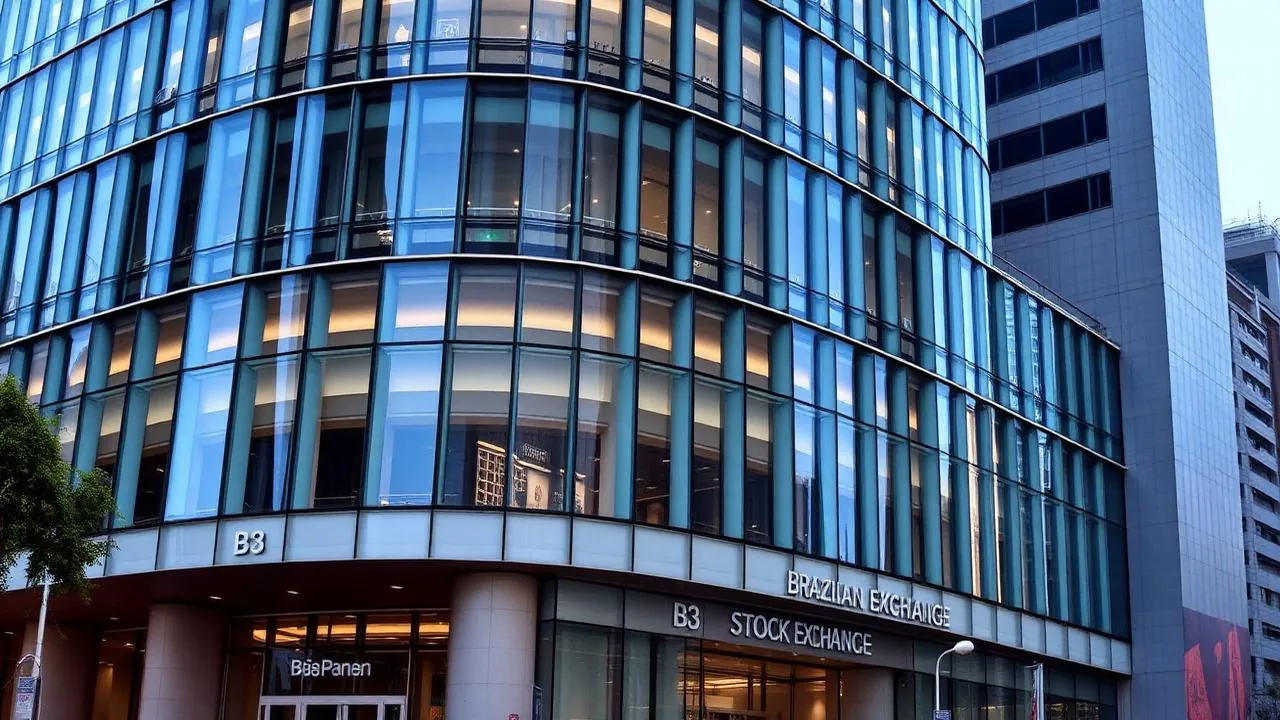
The Brazilian Sustainable Taxonomy (TSB) is being developed by the federal government, with the Finance Ministry, the central bank, the securities regulator and the development bank BNDES taking part, under the Ecological Transformation Plan. The aim is to create a common language between companies, investors and regulators about what counts as a sustainable activity in the Brazilian context.
The motivation is pragmatic. Brazil needs to attract trillions of reais in green investment to meet its climate commitments (the NDC), finance the energy transition, protect the Amazon and modernise infrastructure. A robust taxonomy directs capital to the right activities and protects the market against financial greenwashing.
Without a taxonomy, any company can declare itself sustainable. With one, there are verifiable technical criteria. That fundamentally changes the dynamics of green finance.
Relationship with the EU Taxonomy
The TSB draws heavily on the EU Taxonomy (Regulation 2020/852), but it is not a copy. The differences reflect the specifics of the Brazilian economy.
Similar structure. Both use the same conceptual architecture: environmental objectives, substantial contribution criteria, the DNSH (Do No Significant Harm) principle and minimum social safeguards. Both are science-based and use quantitative thresholds where possible.
Adapted objectives. The EU Taxonomy defines six environmental objectives: climate mitigation, climate adaptation, sustainable use of water, circular economy, pollution prevention and biodiversity protection. The TSB may add or reframe objectives to reflect Brazilian priorities, such as tackling deforestation, protecting biomes and the social inclusion tied to the transition.
Activities covered. The EU Taxonomy focuses on European industrial sectors: energy, transport, construction, manufacturing. The TSB has to cover agribusiness, forestry, mining and the bioeconomy in greater depth, given Brazil's economic structure. Agriculture accounts for around 25% of GDP once the whole production chain is included.
Interoperability. The TSB is being designed with interoperability in mind. Brazilian companies issuing green bonds to European investors have to demonstrate alignment with the EU Taxonomy. If the TSB is compatible, the same demonstration serves both markets, cutting compliance costs and widening access to international capital.
Technical screening criteria
Assessing an activity under the TSB runs in three stages.
1. Substantial contribution. The activity has to contribute significantly to at least one environmental objective. The contribution is measured by specific technical criteria: a power plant must emit less than X gCO2e/kWh, an agricultural activity must demonstrate soil conservation practices over Y% of the area.
The criteria are science-based and calibrated to the Brazilian context. A hydro plant in the Amazon, for instance, may contribute to climate mitigation (renewable energy) but have a significant biodiversity impact, which triggers the DNSH filter.
2. Do No Significant Harm (DNSH). Even where an activity contributes substantially to one objective, it cannot cause significant harm to the others. A eucalyptus plantation for biomass may contribute to climate mitigation, but if it causes clearing of native vegetation it breaches the DNSH criterion for biodiversity.
DNSH is the mechanism that stops the taxonomy legitimising activities with unacceptable trade-offs. It is also where the greatest technical complexity sits: defining significant-harm thresholds for every combination of activity and objective.
3. Minimum safeguards. The activity has to meet minimum standards on human rights, labour, anti-corruption and tax. These draw on the OECD Guidelines for Multinational Enterprises and the UN Guiding Principles on Business and Human Rights.
Sectors and activities covered
The TSB is being developed in phases, prioritising the sectors most relevant to Brazil's climate transition.
Energy. Renewable generation (solar, wind, hydro, biomass), transmission and distribution, energy efficiency, storage. The criteria will need to distinguish low-impact generation (wind, solar) from generation with environmental trade-offs (large hydro, sugarcane biomass).
Agribusiness. Low-emission livestock (crop-livestock-forest integration), regenerative agriculture, no-till farming, recovery of degraded pasture, traceability of deforestation-free chains. This is where the TSB will differ most from other countries' taxonomies, because of its economic weight and its mitigation and adaptation potential.
Forests and land use. Conservation of native forest, forest restoration, sustainable forest management, agroforestry systems, sociobiodiversity bioeconomy. The interaction with REDD+ and the forest carbon market will be central.
Infrastructure and transport. Low-emission public transport, multimodal logistics, sanitation, solid waste management. Brazilian urbanisation creates massive demand for sustainable infrastructure.
Industry. Steel, cement, petrochemicals, mining. Hard-to-abate sectors that need a taxonomy in order to access transition finance, funding for a gradual shift rather than only for activities that are already green.
Impact on access to green finance
The TSB will change access to capital in at least three ways.
Green and sustainable bonds. Green bond issuers will have to demonstrate that the financed projects are taxonomy-aligned. That replaces the current system, where each issuer sets its own eligibility criteria. Brazil's green bond market moved more than R$ 100 billion in 2024, and the trend is accelerating.
Differentiated credit lines. Commercial and development banks are creating credit lines at reduced rates for taxonomy-aligned projects. The TSB will supply objective eligibility criteria, reducing greenwashing risk and raising lender confidence.
International institutional capital. Global pension funds, insurers and asset managers are adopting the EU Taxonomy as an allocation criterion. An interoperable TSB will let Brazilian assets be classified on the same terms, attracting capital that today flows to markets with established taxonomies.
Green and sustainable bonds
The green and sustainable bond market is the main channel through which the TSB will reach corporate finance.
What a green bond is. A debt instrument whose proceeds go exclusively to projects with environmental benefits. What sets it apart from a conventional bond is the earmarking of proceeds and the commitment to impact reporting. Green bond investors sometimes accept slightly lower yields (the greenium) in exchange for assured environmental impact.
The issuance framework. Before issuing a green bond, a company draws up a framework defining eligible project categories, selection criteria, the process for managing proceeds and reporting commitments. The TSB will standardise the eligible categories, removing subjectivity.
Second Party Opinion (SPO). A second party opinion verifies that the framework aligns with market principles (the ICMA Green Bond Principles) and, in future, with the TSB. Companies with clearly taxonomy-aligned activities will get faster, more favourable SPOs.
Impact reporting. Issuers report annually on the use of proceeds and impact metrics. The TSB will supply standardised metrics, tonnes of CO2e avoided, hectares restored, MW of renewable capacity installed, making issuers easier to compare.
How to prepare
Companies that move ahead of the TSB will have a competitive advantage. These steps are recommended.
1. Map your activities. Identify which of your economic activities are likely to be covered by the TSB. Use the EU Taxonomy as a proxy, since the categories are similar. Classify each activity as potentially eligible, transitional or not covered.
2. Gap analysis. For potentially eligible activities, assess which technical criteria are likely to apply. Compare against current performance. Identify the gaps and estimate the investment needed to close them.
3. Emissions inventory. Demonstrating substantial contribution to climate mitigation will require robust emissions data. If your company does not yet have a GHG inventory covering Scopes 1, 2 and 3, start now.
4. Value chain engagement. DNSH criteria may require supply chain traceability, particularly in agribusiness (zero deforestation) and industry (supplier emissions). Supply chain engagement is a precondition.
5. ESG governance. The TSB will include minimum governance safeguards. Set up committees, policies and internal processes to demonstrate compliance.
How Mangue Tech helps
Mangue Tech supports companies preparing for the TSB with an integrated set of services.
The GHG inventory covering Scopes 1, 2 and 3 provides the data foundation needed to demonstrate substantial contribution to climate mitigation. The Scope 3 module with supply chain engagement makes it possible to map DNSH risks across the supplier base.
Regulatory framework consulting helps interpret the TSB's technical criteria (and the EU Taxonomy's, for companies with European operations) and map the gaps between current performance and the required thresholds.
For financial services, Mangue Tech supports PCAF implementation, the precondition for banks classifying their lending and investment portfolios under the TSB.
- The TSB will classify activities as sustainable against technical criteria, so prepare before the final publication
- TSB alignment will be a condition of access to green bonds, green credit lines and institutional capital
- Start with the emissions inventory and a map of potentially eligible activities
- Interoperability with the EU Taxonomy opens the door to international capital
Perguntas frequentes
Is the TSB already in force?+
Not yet. It is being developed by the federal government, with public consultations planned. The first version is expected in 2026-2027. Companies that move early will have a competitive advantage.
Does my company have to be TSB-aligned?+
The TSB will not be mandatory to operate, but it will be the criterion for accessing green finance, green bonds and institutional capital. Companies that do not align will be at a competitive disadvantage on capital.
What is the difference between the TSB and the EU Taxonomy?+
A similar conceptual structure (substantial contribution + DNSH + safeguards), but with activities and criteria adapted to the Brazilian context, particularly agribusiness, forests and the bioeconomy.
- Sustainable taxonomy
- A classification system defining technical criteria for determining which economic activities are environmentally sustainable.
- DNSH
- Do No Significant Harm, the principle requiring that an activity does not cause significant harm to other environmental objectives.
- Green bond
- A debt instrument whose proceeds go exclusively to projects with verifiable environmental benefits.
- Greenium
- The negative yield differential investors accept on green bonds relative to conventional ones.
- SPO
- Second Party Opinion, an independent opinion on whether a green bond framework aligns with market principles.
- Transition finance
- Financing for companies in hard-to-abate sectors that are in the process of moving to low carbon.
- Taxonomia Sustentável Brasileira · Ministério da Fazenda
- Lei 15.042, de 11 de dezembro de 2024 · Sistema Brasileiro de Comércio de Emissões · Presidência da República
Frameworks mencionados neste artigo
IFRS S1 & S2 Roadmap
The 12 decisions your CFO has to make before 2027. Free.